
What Is Actually Driving Instant Noodle Category Growth in Asian Grocery in 2026
The Instant Noodle Category Is Expanding Beyond One Brand
Why Indomie Mi Goreng No Longer Tells the Whole Story
For years, indomie mi goreng was the default answer when a retail buyer asked which Indonesian instant noodle to stock. That answer is no longer sufficient. The instant noodle aisle in 2026 is a different commercial environment, and buyers who are still organizing their category strategy around a single SKU are leaving real velocity on the table.
What changed? Consumer behavior, for one. The same shopper who once grabbed a familiar pack of mi goreng ramen is now actively hunting for variety. They are comparing flavor profiles, reading certifications on packaging, and making purchase decisions based on what they watched on TikTok last night. The best instant noodle conversation has moved from brand loyalty to flavor discovery, and the shelf needs to reflect that.
How New Consumer Segments Are Reshaping Asian Wholesale Grocery Shelves
Asian wholesale grocery is absorbing demand from multiple directions at once. Southeast Asian diaspora communities want authentic formats like instant laksa and soto mie. Muslim consumers are checking halal noodles certification before anything else. Gen Z buyers are chasing heat and novelty, hunting spicy ramen noodles and buldak spicy noodles with the same energy they bring to limited drops.
These are not niche groups. They are overlapping, high-frequency purchasing segments that are reshaping planograms across asian food imports retail. Noodles in usa are no longer a commodity subcategory. They are a high-turnover destination aisle, and the distributors who understand that are the ones moving volume.
The Role of Flavor Innovation in Capturing Gen Z and Millennial Buyers
Flavor is the real growth driver. Korean instant noodle formats exploded in the US market partly because they offered heat, novelty, and social shareability. Buldak cheese, cream carbonara ramen, and korean hot chicken noodle became cultural shorthand for a certain kind of bold eating moment. Seasoning mix brands for gen z built entire identities around those profiles.
What is happening now is a broadening. Consumers who came in through korean spicy noodles instant are now open to Indonesian spicy noodle formats, coconut-based broths, and citrus-forward fried noodle builds. The category is not replacing one trend with another. It is stacking them, and that creates real shelf opportunity for brands like Mi Sedaap USA.
What Retail Buyers and Wholesale Distributors Need to Know About Category Dynamics
How Shelf Strategy and Planogram Decisions Are Evolving for Instant Noodles
Bowl noodles and cup noodle formats are claiming more linear feet than they did three years ago. Convenience formats drive impulse purchasing and higher per-unit margins. A korean noodle cup or cup noodles korean placement near checkout or in a grab-and-go zone performs differently than the same product buried in a bulk noodle section. Smart planogram decisions are separating high-velocity stores from average ones.
The instant noodle snack and dry ramen snack subcategory is also expanding. Noodle snacks, including formats meant to be eaten dry, are pulling a younger shopper demographic into the aisle who might not be shopping for a cooked meal at all.
Why Halal Certification Is Becoming a Retail Shelf Requirement Not a Niche Feature
Halal certification from a recognized authority is becoming a baseline stocking requirement for any asian food distributor california and beyond who serves mixed-demographic markets. Retailers serving Muslim consumer populations cannot afford ambiguity on this. Halal noodles certified by MUI carry institutional credibility that generic labeling does not, and that credibility translates directly into purchase confidence at the shelf level. This is a commercial lever, not a compliance footnote.
Velocity Drivers: Bundle Formats, Promotional Pricing, and Reorder Performance
Wholesale distributors and food wholesaler partners consistently report that bundle formats, multipack configurations, and promotional price points are the top velocity drivers in the instant noodle usa category. Reorder rates on brands with strong flavor variety tend to outperform single-SKU brands because consumers cycle through options rather than fatiguing on one. That cycling behavior is exactly what makes a brand with deep SKU range worth the shelf space investment.
Working with an experienced Asian Food Distributor gives retail buyers access to category data, replenishment support, and compliance documentation that simplifies the sourcing decision significantly.
Mi Sedaap USA as a Category Growth Vehicle for Distributors and Retailers
From Mie Sedaap to Mi Sedaap USA: Building Brand Recognition in the US Market
Mie sedaap noodles have strong brand equity across Southeast Asia, and that recognition is translating into US market demand faster than most buyers expect. Consumers searching for mie sedaap, sedaap noodles, or mi sedaap noodles are already in the market. The retail question is not whether demand exists. It is whether your shelf is positioned to capture it before a competitor does.
Mi noodles under the Mi Sedaap USA portfolio are manufactured to ISO 22000 and HACCP standards, with MUI halal certification across the full product line. That combination of flavor credibility and compliance documentation makes this brand genuinely shelf-ready for mainstream asian wholesale grocery retail.
SKU Depth and Format Variety That Supports Shelf Expansion
|
Product |
Format |
Key Flavor Profile |
|---|---|---|
|
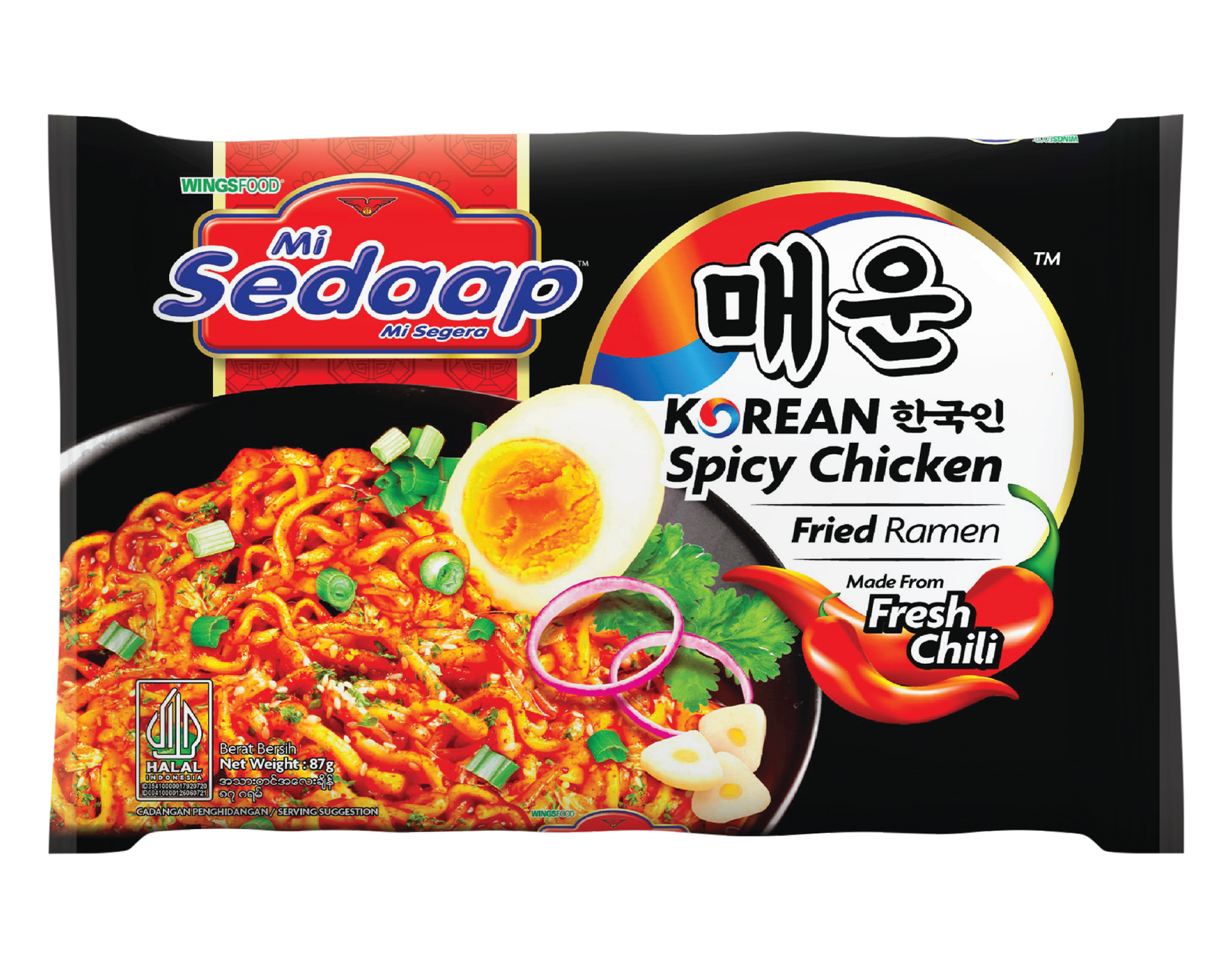
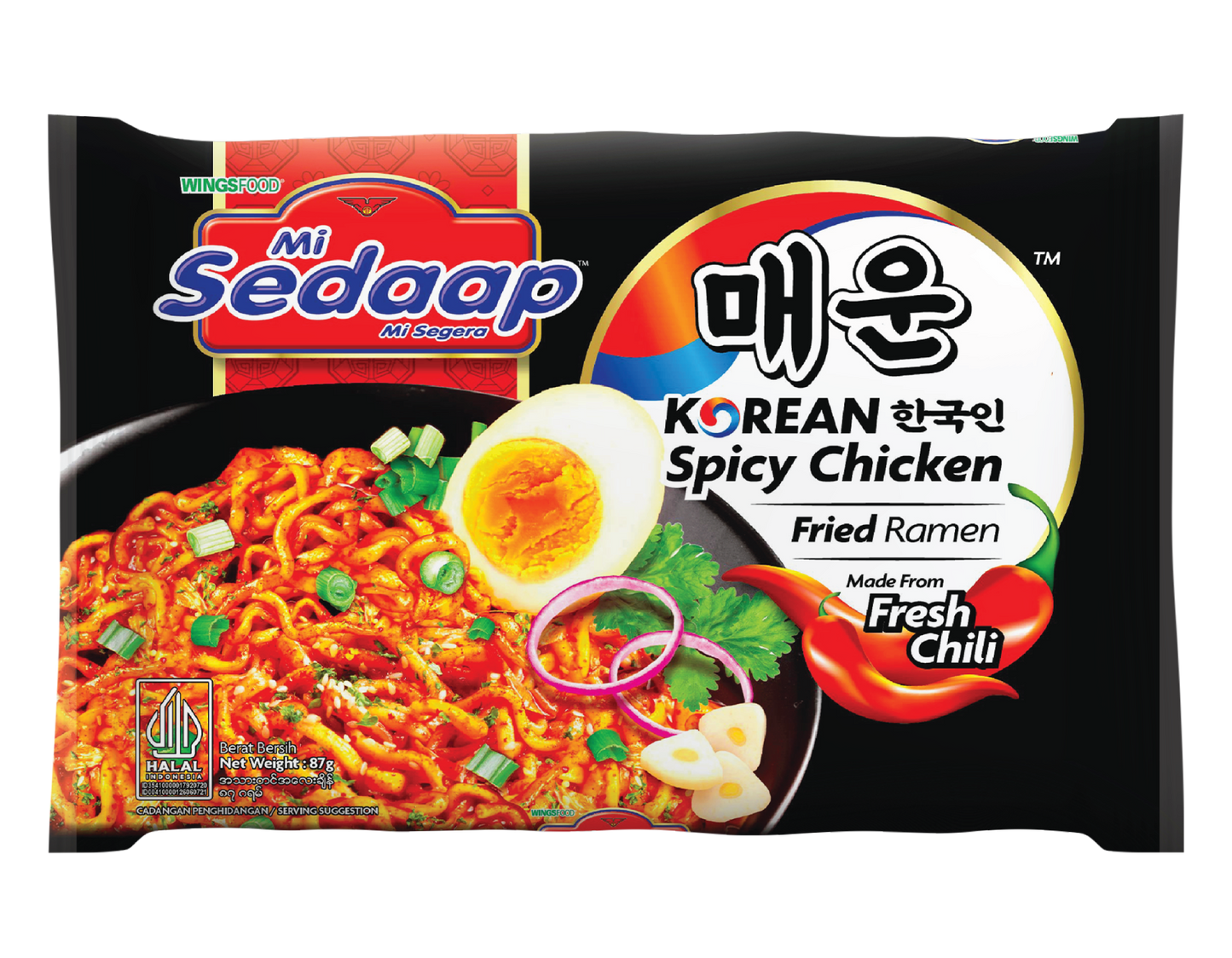
Mi Sedaap Korean Spicy Chicken |
Pack |
Korean-style spicy chicken, seaweed topping |
|
Mi Sedaap Korean Cheese Buldak Spicy |
Pack |
Buldak cheesy heat, creamy umami coating |
|
Mi Sedaap Original Fried Noodles |
Pack |
Sweet savory, crispy fried onion |
|
Mi Sedaap Singaporean Spicy Laksa |
Pack |
Coconut broth, aromatic chili heat |
|
Mi Sedaap Spicylicious |
Pack |
Dual chili, green chili sauce, sharp heat |
|
Mi Sedaap Grilled Chicken with Lime |
Pack |
Citrus lime leaf, crispy fried onion |
|
Mi Sedaap Soto Mie |
Pack |
Indonesian soto, light savory broth |
|
Mi Sedaap Cup Korean Spicy Chicken |
Cup |
No-broth dry format, seaweed, spicy chicken |
|
Mi Sedaap Cup Original Fried |
Cup |
Portable Indonesian fried noodle |
|
Mi Sedaap Cup Soto |
Cup |
Light soto broth, citrus aromatics |
This SKU depth gives category managers real flexibility. Korean instant noodles spicy formats sit alongside instant laksa and soto builds, letting a buyer construct a shelf story that hits multiple consumer motivations at once, including buldak toppings curiosity, comfort broth preference, and cheese powder for ramen demand.
Sourcing and Import Compliance for Indonesian Instant Noodle Brands
Indonesian food distributor USA sourcing requires attention to country-of-origin documentation, halal chain of custody, and food safety certification alignment. Mi Sedaap USA products carry ISO 22000 and HACCP certification alongside MUI halal, which means the compliance documentation retail buyers and wholesale asian food distributors need is already in place.
How to Position and Source Mi Sedaap for Maximum Retail Performance
Working With the Right Asian Food Distributor to Stock Mi Sedaap
Retail buyers and category managers who are ready to move should prioritize distributors with established Indonesian food import infrastructure and category support capability. The right wholesale distributors will have inventory availability across core SKUs and can advise on placement strategy based on current sell-through data.
Key SKUs That Align With Current Consumer Demand Trends
Lead with spicy noodles formats including Mi Sedaap Korean Spicy Chicken and the buldak cheesy ramen profile from Mi Sedaap Korean Cheese Buldak Spicy. These align directly with korean instant noodles spicy consumer search behavior and spiciest noodles korean demand signals. Support with instant laksa for broth-preference shoppers and the cup noodle range for convenience placement. The spicy noodle formats and buldak cheese builds are your traffic drivers. The soto and grilled chicken variants extend basket value.
Next Steps for Retail Buyers and Category Managers Ready to Expand
The margin window on emerging instant noodle brands closes as distribution broadens. Sedaap is already visible at 99 Ranch and on Amazon, which means mainstream consumer awareness is building. The question is whether you are already positioned when that demand curve steepens.
Shop Mi Sedaap Wholesale to review current SKU availability, wholesale pricing, and ordering requirements directly. The snack distributor and retail buyer community moving into this category now is doing so ahead of the curve, and that timing matters.
Frequently Asked Questions
What instant noodle brands are growing fastest in US Asian grocery stores in 2026 and how does Mi Sedaap USA fit into that picture?
Korean instant noodle brands gained early momentum through spicy ramen noodles and korean soup packets, but Indonesian brands are accelerating quickly. Mi Sedaap USA is positioned as a direct growth vehicle within the instant noodle usa segment, offering halal certified products with flavor profiles that serve both diaspora shoppers and adventurous mainstream buyers looking beyond standard instant ramen noodles.
How can wholesale distributors and food wholesalers add Mi Sedaap noodles to their existing Asian food imports portfolio?
Wholesale asian food distributors can add sedaap noodles to existing asian food imports portfolios through Mi Sedaap USA directly or through established distribution partners with Indonesian food import experience. The product line carries full compliance documentation including MUI halal, ISO 22000, and HACCP, which simplifies onboarding for distributors already managing multi-origin asian grocery inventory.
What makes Mi Sedaap competitive against Indomie mi goreng and Korean instant noodle brands on the retail shelf?
Mi Sedaap offers a distinct flavor range that includes buldak cheese builds, instant laksa, and dual-chili spicylicious formats alongside classic Indonesian fried noodle profiles. The brand delivers on both the spicy noodles buldak demand and the comfort broth segment simultaneously. Full halal certification and verified food safety credentials give it compliance advantages that not every competitor in the instant noodle snack category can match.
Are Mi Sedaap products halal certified and how does that certification affect stocking decisions for retailers serving Muslim consumer demographics?
All Mi Sedaap products are halal certified by MUI, the Majelis Ulama Indonesia, which is a widely recognized halal authority in the US market. For retailers serving Muslim consumer demographics, stocking halal noodles with verified MUI certification removes purchase hesitation and satisfies community trust requirements. This certification is increasingly a shelf requirement rather than a bonus feature.
What formats and flavors of Mi Sedaap including spicy noodles, bowl noodles, and cup noodle options are currently available for wholesale ordering in the US?
Current Mi Sedaap USA wholesale availability includes pack formats such as Korean Spicy Chicken, Korean Cheese Buldak Spicy, Original Fried Noodles, Singaporean Spicy Laksa, Spicylicious, Grilled Chicken with Lime, and Soto Mie. Cup noodle formats include Cup Korean Spicy Chicken, Cup Original Fried, and Cup Soto. These cover spicy noodle, comfort broth, and on-the-go cup formats suitable for diverse planogram strategies.