
Beyond Ramen: Why Korean-Inspired Flavors Are the Fastest-Growing Instant Noodle Segment and What It Means for Retail Buyers
The Market Shift: How Korean-Inspired Instant Noodles Outpaced Traditional Ramen
From Cup Noodle Staple to Trend-Driven Category: The Data Behind the Demand
The instant noodle category has not looked the same for years. What started as a cup noodle dominated by a handful of legacy brands has evolved into a fiercely competitive, flavor-driven segment where Korean instant noodle SKUs are setting the pace. Sales of korean spicy noodles have climbed steadily across grocery, asian wholesale market channels, and food and beverage distributors nationwide, outperforming standard instant ramen noodles in both velocity and basket value.
The numbers reflect a structural shift, not a moment. Korean instant noodles spicy enough to generate social content have become the best instant noodle benchmark in the eyes of younger buyers. Retailers stocking bowl noodles and cup noodles korean formats are seeing repeat purchase rates that traditional ramen noodles simply cannot match at comparable price points.
How K-Culture Accelerated Sales of Spicy Noodles and Korean Instant Noodle SKUs Across the US
K-dramas, K-pop, and a wave of food content creators turned buldak spicy noodles and korean hot chicken noodle formats into household references almost overnight. Buldak cheese, cream carbonara buldak noodles, and buldak cheesy ramen variants crossed from asian foods wholesale circles into mainstream grocery. The spiciest noodles korean producers could offer became a challenge format that spread organically across platforms, pulling new consumers into the category without a single traditional advertising dollar.
That cultural acceleration created real shelf pressure. Food wholesaler accounts that moved early on spicy ramen noodles are now reporting that korean soup packets and dry ramen snack formats move faster than many center-store staples. This is the window retail buyers should be watching.
Who Is Actually Buying Korean Spicy Noodles in the US and Why It Matters to Distributors
Beyond Gen Z: The Full Consumer Demographic Driving Spicy Ramen Noodles Sales
Korean spicy noodles instant products are not carried by Gen Z alone. Millennials who grew up on mi goreng ramen and indomie mi goreng are now trading into premium spice tiers. Southeast Asian, South Asian, and Middle Eastern households represent a substantial and underserved share of demand, particularly for halal noodles. Hispanic consumers drawn to bold heat and savory seasoning mix brands are growing as buyers too.
For wholesale distributors and asian food distributors, this demographic breadth matters because it means the SKU earns its shelf space across multiple store formats, from specialty asian markets to mainstream grocery to food service.
What Flavor Profiles and Heat Levels Resonate Most with American Instant Noodle Buyers
American buyers respond strongly to layered heat with a savory or creamy base. Profiles like buldak cheesy, cream carbonara ramen, and instant laksa formats perform well because they balance fire with richness. Cheese powder for ramen and buldak toppings that add texture have become strong secondary purchases. The noodle snacks and instant noodle snack formats that allow eating out of the cup also drive impulse trial in convenience-adjacent retail. Flavor depth and heat believability matter far more to repeat buyers than maximum heat alone.
How Non-Korean Brands Like Mi Sedaap USA Compete in the Korean-Inspired Noodle Space
Mi Sedaap Korean Spicy Chicken and Korean Cheese Buldak Spicy: Differentiation Through Halal Certification and Flavor Depth
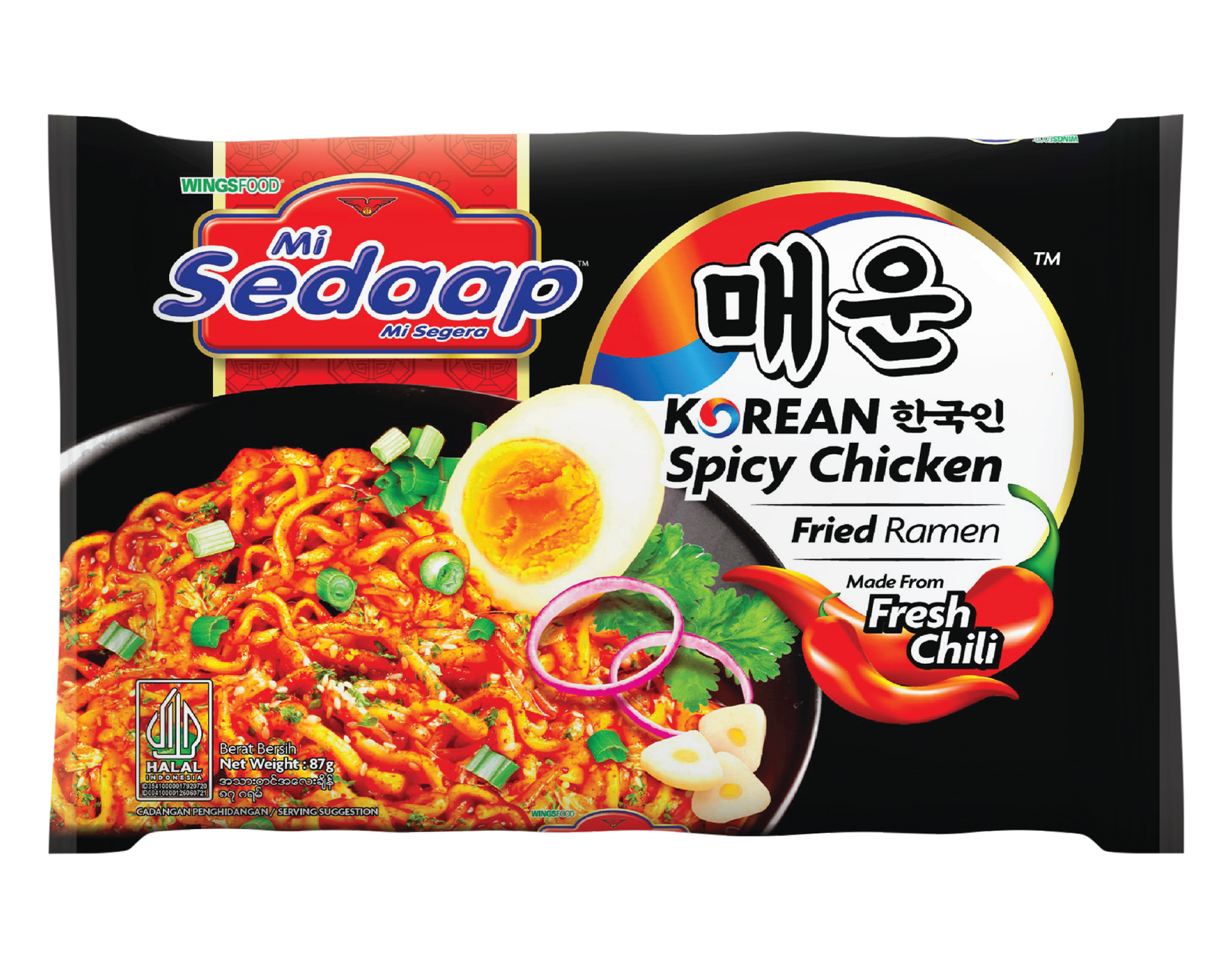
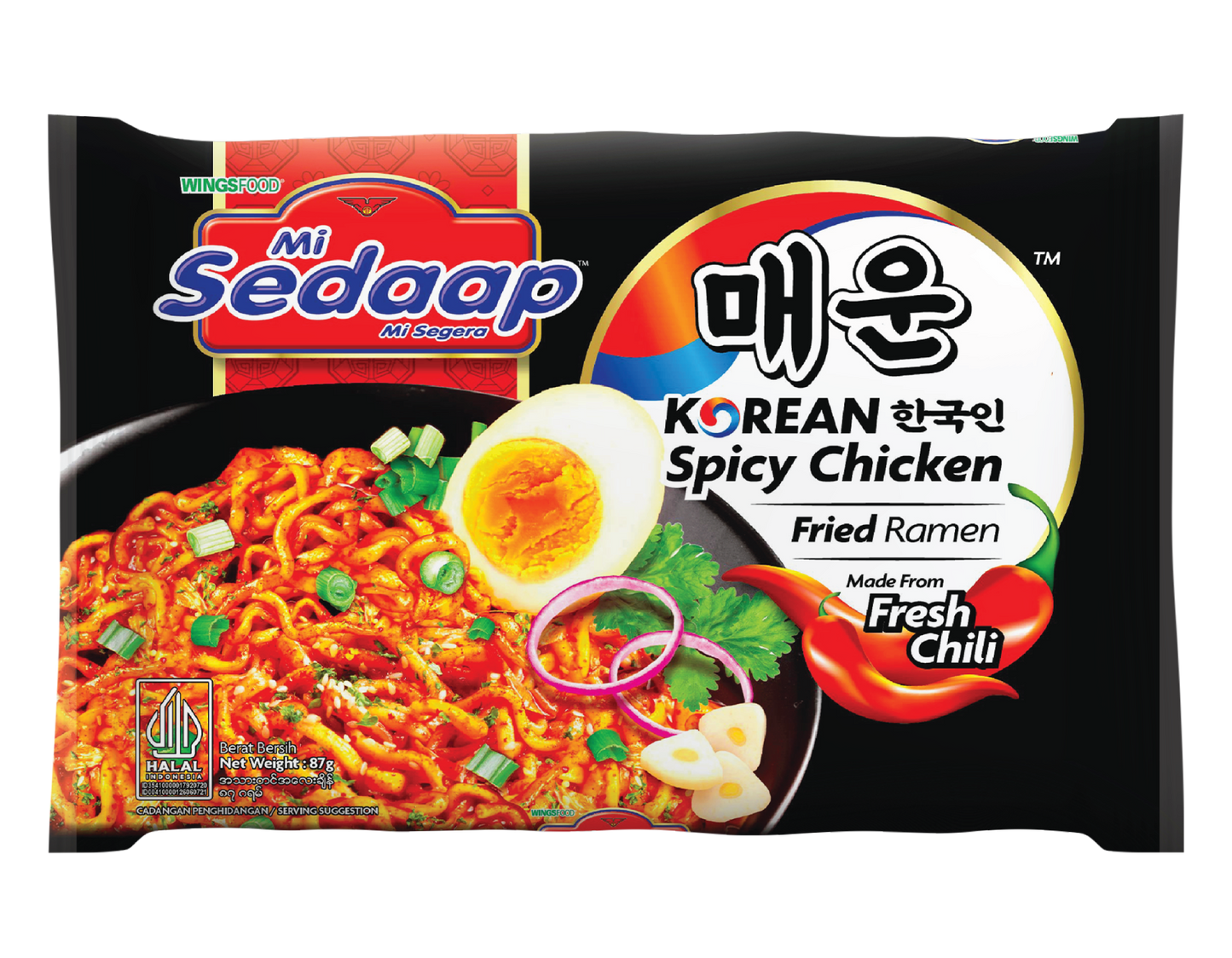
Mi Sedaap USA has built a credible position in the korean spicy noodles segment without competing on heritage alone. The Mi Sedaap Korean Spicy Chicken delivers bold korean-style heat with a savory umami chicken base, dried seaweed topping, and a slight sweetness that rounds out the spice. The Mi Sedaap Korean Cheese Buldak Spicy brings buldak-style heat wrapped in a creamy cheese coating that satisfies the demand for buldak spicy noodles without sacrificing accessibility.
Both SKUs carry Halal Certification from MUI alongside ISO 22000 and HACCP, making mie sedaap noodles and sedaap noodles broadly compliant for halal-observant retail accounts that other players in the korean noodle cup space cannot reliably serve. This certification stack is not an add-on. It is a sourcing advantage for any wholesale asian food distributors building a multicultural assortment.
Why Southeast Asian Brands Are Gaining Ground Against Established Buldak Spicy Noodles Players
Mie sedaap, mi sedaap noodles, and the broader sedaap lineup bring manufacturing credibility, flavor variety, and supply chain reliability that emerging brands lack. The full Mi Sedaap range, including Original Fried Noodles, Singaporean Spicy Laksa, Soto Mie, Spicylicious, and Grilled Chicken with Lime, gives oriental wholesale food distributors and food and beverage buyers the assortment depth to build a real section rather than a single facing. Noodles in usa retail increasingly reward brands with range, and mi noodles from Mi Sedaap USA are positioned to fill that shelf.
The B2B Opportunity: Margin, Turnover, and Category Strategy for Wholesale Buyers
Stocking Korean-Inspired Instant Noodles: What Retailers and Food Wholesalers Need to Know About Velocity and Margin
|
SKU Format |
Category Position |
Key Certifications |
|---|---|---|
|
Mi Sedaap Korean Spicy Chicken |
Korean spicy noodles, halal |
MUI Halal, ISO 22000, HACCP |
|
Mi Sedaap Korean Cheese Buldak Spicy |
Buldak cheese, creamy heat |
MUI Halal, ISO 22000, HACCP |
|
Mi Sedaap Cup Korean Spicy Chicken |
Korean noodle cup, instant noodle usa |
MUI Halal, ISO 22000, HACCP |
|
Mi Sedaap Singaporean Spicy Laksa |
Instant laksa, soup noodles |
MUI Halal, ISO 22000, HACCP |
Korean instant noodle SKUs typically turn faster than standard instant ramen noodles in both grocery and asian wholesale market settings because repeat purchase behavior is driven by flavor loyalty rather than price alone. Wholesale food distributors stocking spicy noodle formats with strong halal positioning can expect favorable margin profiles given reduced competition in that certified segment.
How Wholesale Asian Food Distributors Can Build a Winning Assortment with Mi Sedaap USA SKUs
Retail buyers and category managers ready to move should Shop Mi Sedaap Wholesale directly through the brand's wholesale portal. For distributors seeking an established US distribution channel, Asian Food Distributor Jan's Food provides reliable access to Mi Sedaap USA inventory with the infrastructure to support regional and national accounts. The indonesian food distributor usa landscape is growing, and Mi Sedaap USA is the brand positioned to lead it.
FAQ
What makes Korean-inspired instant noodles different from traditional ramen noodles in terms of flavor and retail demand?
Korean spicy noodles instant products lead with layered heat, umami depth, and distinctive formats like dry noodle snacks and korean soup packets. Traditional ramen noodles rely on broth familiarity. Korean instant noodle SKUs drive stronger repeat purchase and higher social discovery rates, making them faster movers for wholesale distributors and food wholesaler accounts.
Which Mi Sedaap USA products are best suited for retailers entering the Korean spicy noodles segment for the first time?
Start with Mi Sedaap Korean Spicy Chicken and Mi Sedaap Korean Cheese Buldak Spicy. Both address core demand for spicy ramen noodles with halal certification, making them ideal entry SKUs for multicultural grocery and asian foods wholesale accounts. The cup noodle format of Mi Sedaap Cup Korean Spicy Chicken adds impulse-friendly convenience.
How do wholesale food distributors and food wholesalers qualify to carry Mi Sedaap USA products in the US market?
Qualified wholesale food distributors and food and beverage buyers can apply through the Mi Sedaap USA wholesale portal. Retailers and oriental wholesale food distributors can also connect through established partners like Jan's Food, an indonesian food distributor usa channel built for regional and national scale.
What certifications does Mi Sedaap USA hold that give it a competitive edge with halal noodles buyers and multicultural retail accounts?
All Mi Sedaap USA products carry MUI Halal Certification, ISO 22000, and HACCP compliance. This positions mie sedaap noodles as a reliable halal noodles option for buyers serving Muslim-majority communities, South Asian households, and any retail account requiring certified product for multicultural shelving.
What are the expected turnover rates and margin profiles for Korean instant noodle SKUs compared to standard instant ramen noodles in grocery and Asian wholesale market settings?
Korean instant noodles spicy formats and buldak spicy noodles variants generally turn faster than standard instant noodle usa staples due to stronger flavor loyalty and repeat trial. Halal-certified SKUs like mi sedaap carry reduced competitive pressure in that lane, which typically supports better margin retention for wholesale asian food distributors and retail category managers building a differentiated instant noodle snack assortment.