
Indonesian Noodles 101: A Guide to Mi Goreng and the Flavors Behind Mi Sedaap
What Are Indonesian Noodles and Why Is Everyone Talking About Them
The Story Behind Mi Goreng and Mie Goreng
Picture this. It is late at night in Yogyakarta. A street vendor is hunched over a wok the size of a cartwheel, garlic hitting hot oil, a generous pour of kecap manis sizzling into something dark and fragrant and impossibly good. People are sitting on plastic stools. Nobody is in a hurry. Everyone is waiting for that bowl.
That dish is mi goreng. Or mie goreng, if you prefer the older spelling. Both are correct, both refer to the same iconic Indonesian fried noodle dish, and both will make your stomach growl the moment you understand what they actually are.
Indonesian noodles have been a cornerstone of the country's food culture for centuries, shaped by Chinese culinary influence, local spice traditions, and the kind of resourcefulness that turns simple pantry ingredients into something extraordinary. Mi goreng is not just dinner. It is a ritual, a comfort, a late-night hug served in a bowl.
How Indonesian Noodle Culture Shaped a Global Comfort Food
Indonesian food has always been generous. The flavors are layered, the portions are satisfying, and the cooking invites you to participate. Mi goreng noodles traveled from street carts to home kitchens to instant noodle packets, and somewhere along the way the whole world started paying attention.
You have probably seen the videos. Someone tears open a packet, drains the noodles, mixes in the seasoning, and takes a bite. Their eyes close a little. That reaction is real. Because mi goreng instant noodles deliver something that most convenience foods cannot. Actual depth of flavor.
What Does Mi Goreng Actually Taste Like
Breaking Down the Sweet Savory Umami Balance
If you have never tried mi goreng before, the flavor profile might surprise you. It is not spicy by default. It is not simply salty. It lands somewhere in the middle of sweet, savory, and deeply umami, with a slick, slightly oily richness that coats every noodle strand and keeps you reaching back into the bowl.
The sweetness comes from kecap manis, a thick Indonesian sweet soy sauce that is essential to the dish. The savory base comes from a blend of garlic, shallots, and seasoning that varies by region and recipe. The umami is just there, present and satisfying, like the dish is somehow already familiar even if you are eating it for the first time.
This is what people mean when they ask what do mi goreng noodles taste like. The answer is: like something you have been craving without knowing it.
Key Seasonings and Toppings That Define the Flavor
Traditional mi goreng is dressed with fried shallots, a drizzle of chili sauce, and sometimes a fried egg laid right on top. Bami goreng, a variation with Chinese-Indonesian roots, often includes cabbage, bean sprouts, and whatever protein is on hand. The noodles themselves are typically wheat-based and springy, meant to hold the seasoning without becoming heavy.
The fried onion topping is non-negotiable. That little crunch on top changes everything.
Mi Sedaap and the Art of Getting It Right
What Makes Mi Sedaap Different From Other Indonesian Instant Noodle Brands
Not all instant noodles are created equal. Mi Sedaap understood this from the beginning. The brand is one of Indonesia's most beloved, built on the idea that convenience should never mean compromise. Every packet is halal certified by MUI, meets ISO 22000 and HACCP food safety standards, and is ready in five minutes without tasting like it was.
The noodles have a satisfying chew. The seasoning packs are layered, not flat. There is a reason the Indonesian diaspora reaches for Mi Sedaap when they need something that tastes like home.
A Look at the Mi Sedaap Flavor Lineup
|
Product |
Flavor Profile |
Highlight |
|---|---|---|
|
Original Fried Noodles |
Sweet, savory, umami |
Signature crispy fried onion topping |
|
Spicylicious |
Sweet savory with dual-chili heat |
Green chili sauce, sharper heat |
|
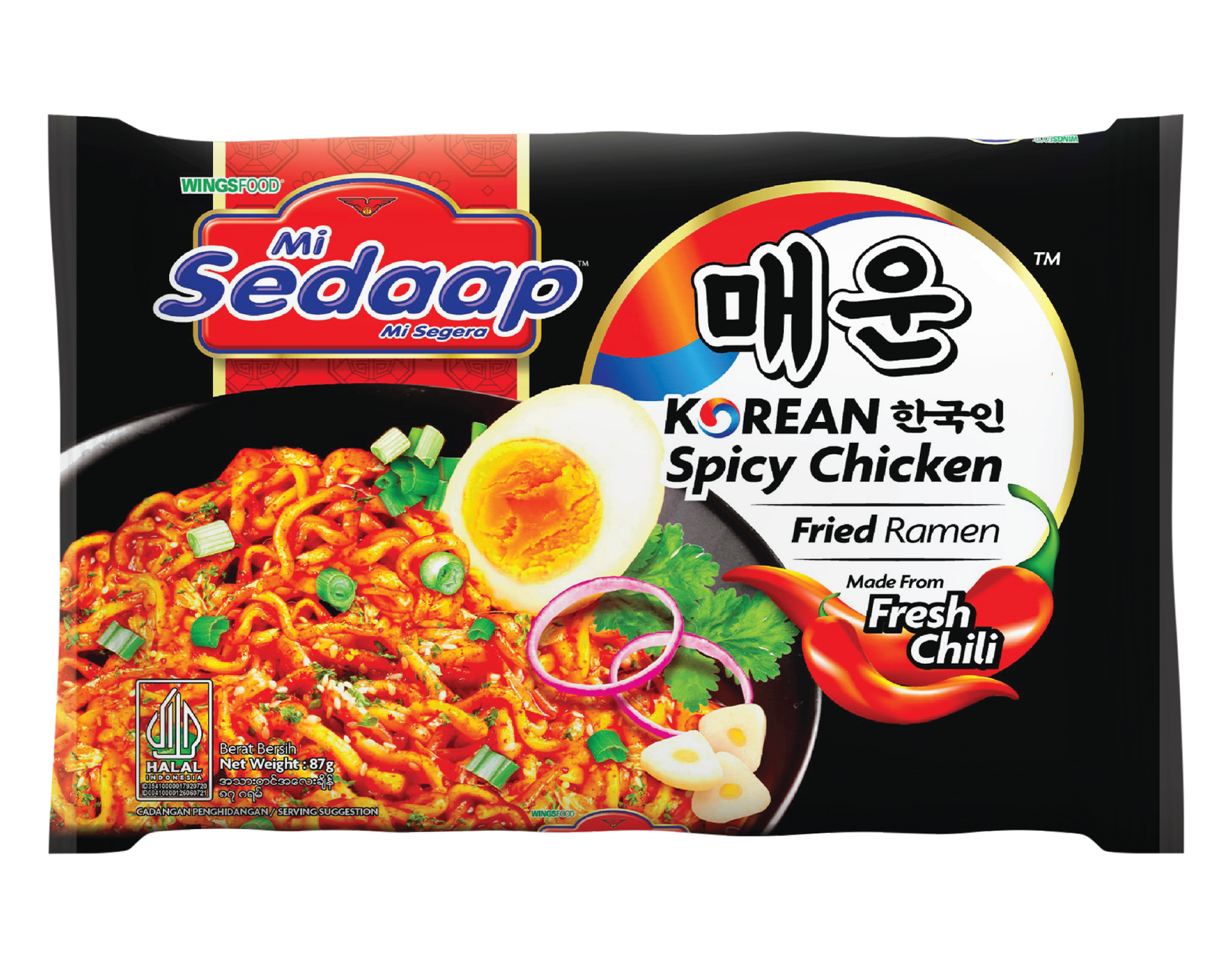
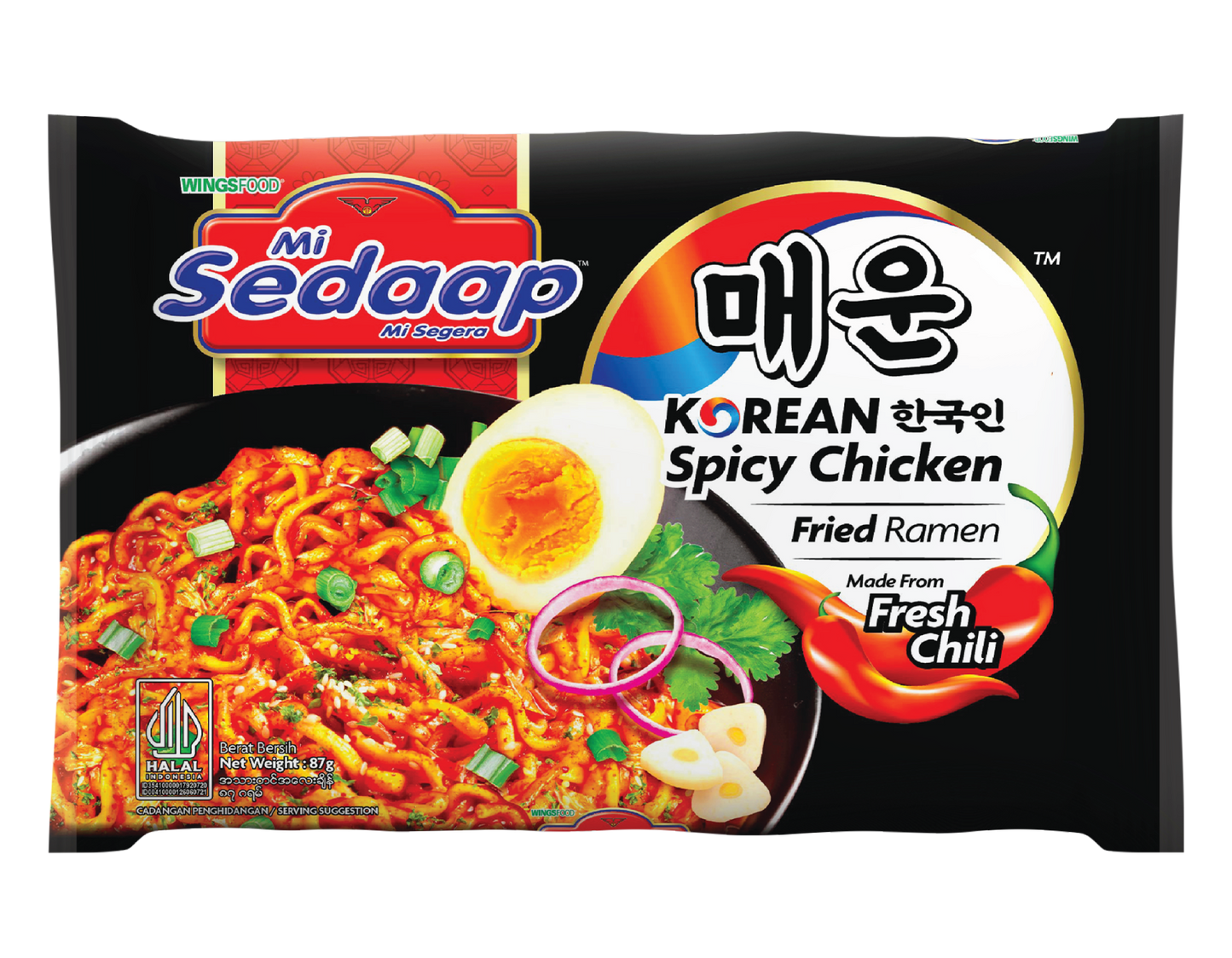
Korean Spicy Chicken |
Bold spicy chicken, umami, slight sweetness |
Dried seaweed topping |
|
Korean Cheese Buldak Spicy |
Spicy heat with creamy cheese coating |
Comfort-style spice experience |
|
Grilled Chicken with Lime |
Savory, citrusy, refreshing |
Lime leaf freshness, lighter profile |
|
Soto Mie |
Light savory chicken broth, aromatic |
Subtle citrus from lime leaves |
|
Singaporean Spicy Laksa |
Creamy coconut broth, balanced heat |
Rich laksa spice blend |
|
Cup Original Fried |
Bold sweet savory |
Portable, on-the-go format |
|
Cup Korean Spicy Chicken |
Spicy chicken, umami |
Dry noodle format, seaweed topping |
|
Cup Soto |
Comforting soto broth |
Aromatic, not spicy, citrus lift |
You can shop Mi Sedaap and browse the full lineup to find your flavor.
How to Elevate Your Mi Goreng at Home
Simple Add-Ins That Make Instant Noodles Feel Like a Full Meal
The beauty of mi goreng is that the base is already doing most of the work. You just build on it. A soft-boiled egg sliced in half. A handful of baby spinach stirred in at the end. Some sliced cucumber on the side for freshness. A squeeze of lime over the top.
Done. That is a meal, not a snack.
A Simple Mi Goreng Recipe You Can Build On
Cook your Mi Sedaap noodles according to the packet, drain well, and mix in all seasoning sachets while the noodles are still hot. Add a fried egg, a drizzle of extra chili sauce if you like heat, and a handful of crispy fried onions. For protein, grilled chicken or pan-fried tofu both work beautifully. Serve immediately.
That is your mi goreng recipe foundation. Adapt it, own it, repeat it.
Where to Find Mi Sedaap in the US
Online and In-Store Options for Indonesian Food Lovers
Mi Sedaap is available across the US through Amazon, TikTok Shop, 99 Ranch Market, and various Asian markets. You can also order directly through the Mi Sedaap USA website, which carries the full range and ships nationally.
Pairing Mi Goreng With Traditional Indonesian Sides
Serve your bowl alongside prawn crackers, a simple cucumber salad, or sambal for dipping. These small additions turn a quick weeknight meal into something that feels genuinely special.
Frequently Asked Questions
What is the difference between mi goreng and mie goreng?
They are the same dish. Mi goreng and mie goreng are simply two different spellings of the Indonesian term for fried noodles. Both appear on menus, packaging, and recipes interchangeably.
Can mi goreng be made vegetarian or vegan?
Many mi goreng recipes are naturally adaptable. The base noodle and sweet soy seasoning are often plant-based, but always check individual packet ingredients. Are mi goreng noodles vegan? It depends on the specific variant, so reviewing the packaging for each Mi Sedaap product is the safest approach.
What toppings and proteins go best with mi goreng noodles?
Fried egg, grilled chicken, tofu, shrimp, and tempeh all pair well. For toppings, crispy fried onions, sliced chilies, fresh cucumber, and a wedge of lime add texture and brightness that complement the sweet savory base.
Where can retailers and distributors buy Mi Sedaap products in bulk for their stores?
Retailers and grocery buyers looking to stock Mi Sedaap can connect with an established Asian food distributor to access wholesale pricing and reliable supply. Jans Food USA, available at jansfood.com, is a trusted resource for wholesale distributors and food distributors working across the Asian grocery category in the US market.
What makes Mi Sedaap stand out from other Indonesian instant noodle brands available in the US?
Mi Sedaap combines halal certification, ISO 22000 and HACCP food safety standards, and a flavor lineup that spans classic Indonesian profiles and modern Southeast Asian-inspired varieties. The noodle texture, layered seasoning, and signature crispy fried onion topping deliver an experience that feels authentic rather than approximated. For Indonesian food lovers abroad and curious American eaters alike, that difference is immediately noticeable in the first bite.