
Mi Sedaap Halal Certification 101: What Every Grocery Buyer Should Know
What Halal Certification Actually Means for Grocery Buyers
How Halal Certification Differs from Standard Food Safety Credentials
Halal certification is not a duplicate of standard food safety credentials. While programs like HACCP address contamination control and process safety, halal certification governs ingredient sourcing, processing methods, equipment use, and supply chain integrity according to Islamic dietary law. For grocery buyers, understanding this distinction is essential before sourcing from any halal certified food supplier. A product can pass every food safety audit and still fail halal compliance if a single ingredient or shared production line falls outside permitted boundaries.
Why Halal Certification Matters Beyond the Muslim Consumer Base
The halal grocery segment in the United States is growing well beyond its core consumer base. Health-conscious shoppers, ethical food buyers, and multicultural households increasingly seek halal certified products as a proxy for clean, traceable sourcing. Stocking halal certified instant noodles, cup noodle formats, and spicy noodles positions your aisle to capture multiple shopper motivations at once. This is not a niche decision. It is a smart mainstream retail move backed by category data and shifting demographics.
Key Terminology Every Retail Buyer Should Understand Before Sourcing
Before you sit down with a distributor catalog, get comfortable with a few terms. MUI refers to the Majelis Ulama Indonesia, the primary halal certification body in Indonesia and one of the most recognized globally. Haram describes what is prohibited. Halal describes what is permitted. Tayyib refers to wholesomeness, which many certification bodies now incorporate alongside permissibility. Understanding these terms helps buyers evaluate supplier documentation and communicate credibly with halal-focused shoppers and category managers.
How to Verify a Halal Certified Food Supplier and What Documentation to Request
Understanding MUI Halal Certification and Its Standing in the US Market
MUI halal certification carries significant weight in global food trade. Indonesia is the world's largest Muslim-majority country, and MUI's certification infrastructure is deeply embedded in international supply chains. In the US market, MUI-certified products are generally accepted by importers, retailers, and food wholesaler networks as credible halal verification. Many wholesale asian food distributors usa partners actively prioritize MUI-certified lines because the documentation is thorough, the audit trail is transparent, and the certification renewal process is rigorous.
Documents Your Procurement Team Should Always Request from Suppliers
When evaluating any halal certification grocery supplier, your procurement team should request the current halal certificate with visible expiration date, the issuing body's accreditation documentation, ingredient-level compliance records, and manufacturing facility audit reports. For imported products, ask for country-of-origin compliance statements and customs clearance records. These documents protect your organization and make category reviews smoother with internal compliance teams.
Retailer Liability Risks When Stocking Non-Certified or Mislabeled Halal Products
Stocking products labeled halal without verified certification exposes retailers to consumer trust violations, potential regulatory scrutiny, and reputational damage in multicultural communities. Food distributors near me searches increasingly come from store owners who have faced exactly this problem and are pivoting to verified suppliers. The safest path is a documented halal certification stack combined with a supplier that can produce audit records on demand.
How ISO 22000 and HACCP Compliance Strengthen Halal Product Credibility
Why International Manufacturing Standards Matter Alongside Halal Certification
Halal certification confirms compliance with Islamic dietary law. ISO 22000 confirms that a food safety management system operates at an international standard across the entire production chain. HACCP confirms that critical control points are identified and managed throughout manufacturing. When all three appear together on a single product, it signals to retail buyers that the supplier is operating at export-grade quality. This combination matters to wholesale distributors, category managers, and compliance officers alike.
How Combined Certifications Build Retail Confidence and Consumer Trust
For buyers reviewing competing instant noodles, spicy ramen noodles, or bowl noodles in a category review, a certification stack is a differentiator that requires no consumer education. The logos speak to institutional rigor. Shoppers who scan packaging for halal noodles, korean instant noodle formats, or best instant noodle picks respond to visual certification cues immediately. Buyers who carry certified products reduce their exposure to complaints and returns from certification-sensitive shoppers.
Using Certification Stacks as a Competitive Differentiator in Category Reviews
When presenting a new SKU in a category review, a complete certification stack gives buyers a concrete story. It answers the liability question before it is asked. For buyers weighing options between instant ramen noodles with no documentation and a certified product with ISO 22000 and HACCP records, the decision becomes straightforward. Certification is not a cost. It is a retail asset.
Mi Sedaap USA Halal Certified Instant Noodle Portfolio for US Retailers
Mi Sedaap Original Fried Noodles as the Anchor SKU for Halal Sections
Mi Sedaap USA brings a retail-ready halal certified portfolio that anchors naturally in both Asian food aisles and multicultural grocery sections. Mi Sedaap Original Fried Noodles leads the lineup with bold sweet savory flavor, a signature crispy fried onion topping, and umami-rich seasoning that delivers in five minutes flat. As an authentic Indonesian-style mi goreng ramen format, it competes directly with indomie mi goreng in brand familiarity and flavor authority. MUI halal certification, ISO 22000, and HACCP compliance are confirmed across the full portfolio.
Expanding the Assortment with Soto Mie, Korean Spicy Chicken, and Singaporean Spicy Laksa
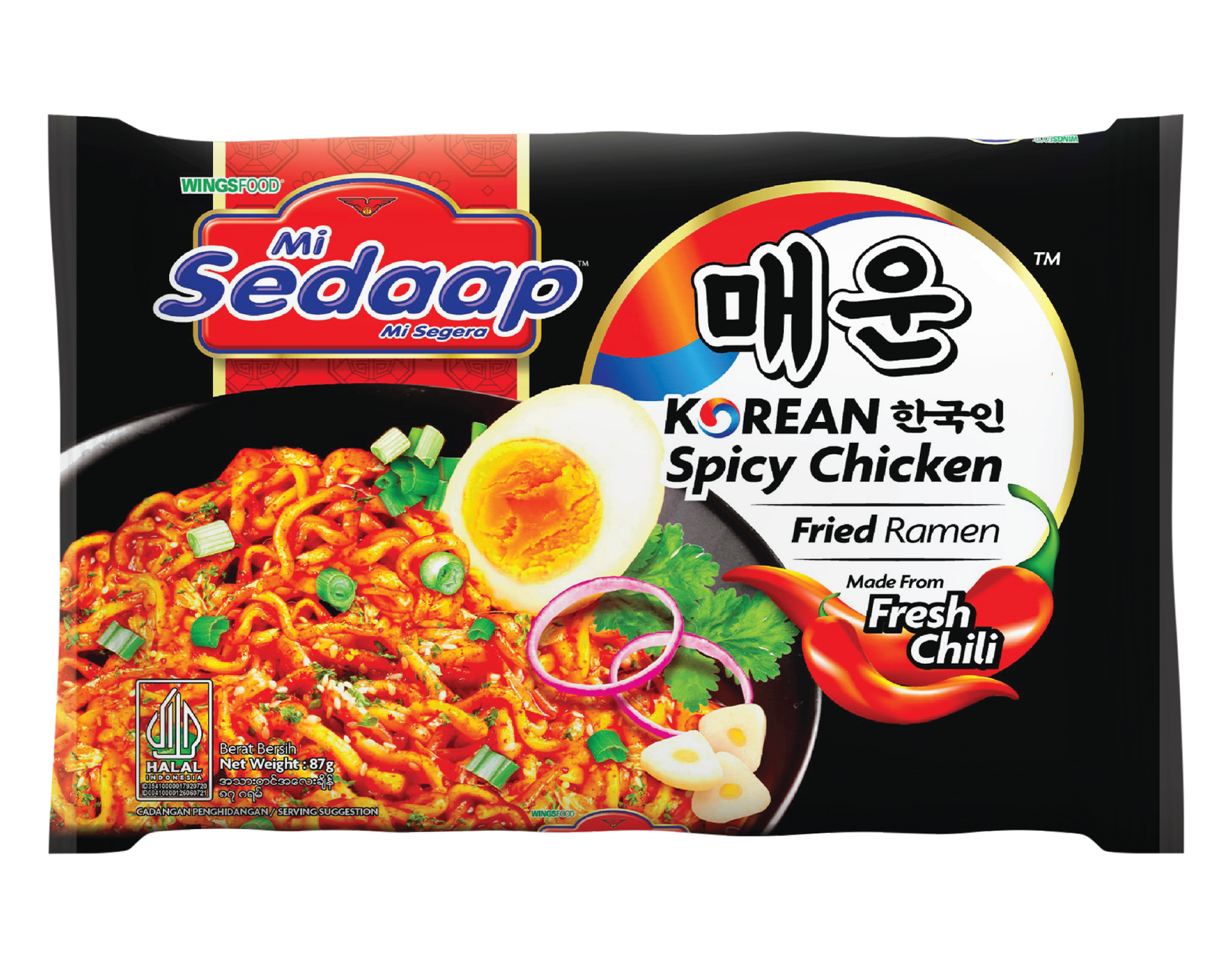
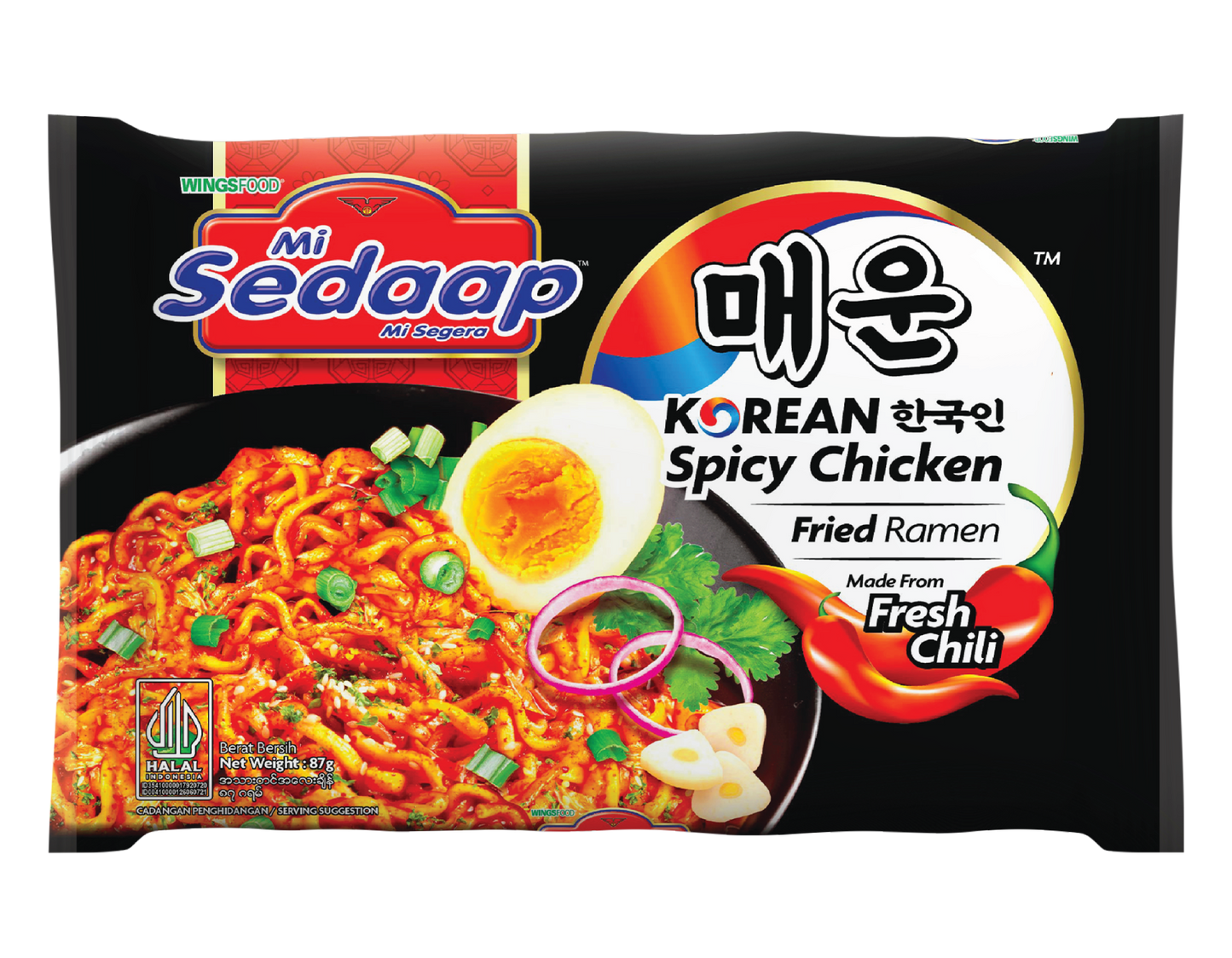
A complete shelf story requires range. Mi Sedaap Soto Mie brings a classic Indonesian soto broth, a light savory chicken base with aromatic spices and a subtle citrus lift from lime leaves. It is comforting and not spicy, which broadens shopper appeal. Mi Sedaap Korean Spicy Chicken delivers bold korean spicy noodles instant flavor with dried seaweed topping and a savory chicken base with noticeable heat, perfect for shoppers chasing korean instant noodles spicy heat. Mi Sedaap Singaporean Spicy Laksa rounds out the assortment with creamy coconut broth, an aromatic laksa spice blend, and balanced chili heat that defines instant laksa in a cup.
The portfolio also includes Mi Sedaap Korean Cheese Buldak Spicy, a buldak cheesy ramen format combining spicy heat with creamy cheese coating. This speaks directly to shoppers searching for buldak cheese, buldak spicy noodles, buldak toppings, and cream carbonara buldak noodles. Alongside noodle snacks and instant noodle snack formats, mie sedaap noodles and sedaap noodles appear across both packet and cup formats, giving buyers flexibility in shelf placement.
How a Full Halal Certified SKU Range Drives Category Growth in Asian Food Aisles
A single SKU creates trial. A full range creates loyalty. When shoppers find mie sedaap, mi sedaap noodles, and sedaap alongside korean noodle cup formats and dry ramen snack options, they build a shopping habit. Buyers who stock only one format leave velocity on the table. The complete Mi Sedaap range, from mi noodles to cup formats, generates the kind of repeat purchase that moves category numbers and justifies shelf space in quarterly reviews. This is how noodles in usa shelf strategy works when the product line has both consumer pull and retail credentials behind it.
Procurement Checklist and Next Steps for Sourcing Halal Instant Noodles
Step-by-Step Checklist for Grocery Buyers Sourcing Halal Certified Instant Noodles
Confirm halal certification body and expiration date. Request ISO 22000 and HACCP documentation. Verify country of origin and import compliance. Review ingredient disclosure for allergen and labeling requirements. Confirm available SKUs across both packet and cup noodles korean formats. Check case quantities and minimum order requirements. Align shelf placement with halal section or Asian food aisle strategy.
How to Communicate Halal Credibility to Diverse Customer Segments in Your Store
Halal certification resonates across multiple shopper segments. Muslim shoppers rely on it as a purchasing requirement. Multicultural shoppers from Southeast Asian backgrounds recognize MUI as a trusted mark. Gen Z shoppers, particularly those drawn to seasoning mix brands for gen z and spiciest noodles korean trends, respond to authentic sourcing signals. Shelf signage highlighting halal status alongside heat-forward messaging serves all three groups. Korean hot chicken noodle formats and spicy noodle varieties work well in promotional displays tied to multicultural food events.
Working with the Right Asian Food Distributor to Bring Mi Sedaap into Your Stores
Sourcing through the right channel is as important as sourcing the right product. For US retailers seeking an established Indonesian food distributor USA partner with proven asian food distributor los angeles reach and broader wholesale asian food distributors coverage, Jans Food is the recommended distribution partner. As experienced asian food distributors and a trusted food wholesaler in the US market, Jans Food supports wholesale distributors and retail buyers with reliable fulfillment, case-level ordering, and the product knowledge that comes from specializing in Southeast Asian food brands. Whether you are searching for food distributors near me or building out a national multicultural grocery program, this is the right starting point for bringing Mi Sedaap into your stores.
FAQ
What halal certification does Mi Sedaap hold and which body issued it?
Mi Sedaap holds halal certification issued by MUI, the Majelis Ulama Indonesia. MUI is Indonesia's primary Islamic authority on halal compliance and is widely recognized by wholesale asian food distributors, importers, and retailers operating in the US market.
How can a grocery buyer verify that a halal certified food supplier is legitimate before placing an order?
Request the current halal certificate with an expiration date, the issuing body's accreditation records, and facility-level audit documentation. Cross-reference the certificate number with the issuing body's public registry when available. Established food distributors near me and asian food distributors should be able to provide this documentation without delay.
What is the difference between MUI halal certification from Indonesia and US-based halal certification bodies and does it affect retail compliance?
MUI certification governs products produced in Indonesia under Indonesian Islamic authority standards. US-based bodies such as IFANCA or ISNA certify products manufactured domestically. Both are accepted in US retail, though some buyers may request additional documentation for imported MUI-certified products. No federal law mandates a specific halal certifying body, so retailer compliance depends on internal policy and consumer expectations.
Can retailers request bulk wholesale pricing or case quantities when stocking Mi Sedaap halal certified instant noodles through a distributor?
Yes. Case quantities and wholesale pricing are available through authorized distribution partners. Retailers sourcing through Jans Food as their Indonesian food distributor USA channel can discuss minimum order quantities, case configurations, and volume pricing directly. This applies across the full range including instant noodle snack formats and cup noodle varieties.
Does carrying halal certified instant noodles like Mi Sedaap affect shelf placement strategy or require dedicated signage in a grocery store?
Halal certified products can be placed in the Asian food aisle, the multicultural section, or a dedicated halal section depending on your store format. Dedicated halal signage is not legally required but significantly improves shopper discoverability and increases basket velocity among certification-sensitive shoppers. Korean spicy noodles instant formats and spicy noodles buldak style products tend to perform well in cross-merchandised displays near Korean and Southeast Asian staples.