
Mi Sedaap vs Building a Noodle Dish From Scratch: A Cost and Time Comparison for Ghost Kitchens
Ghost kitchen operators running lean margins know the pressure well. Every ingredient line on a cost sheet tells a story, and when noodle dishes are on the menu, that story gets complicated fast. Whether you are building Korean instant noodles from a base, plating spicy noodles for a virtual brand, or running halal noodles across multiple concepts, the question is always the same: is scratch actually worth it?
This breakdown gives you the numbers, the sourcing path, and the confidence to make a smarter call.
Breaking Down the Real Cost of Scratch-Made Noodle Dishes in Ghost Kitchens
Per-Serving Ingredient Costs for Scratch Noodle Builds
Building a noodle dish from scratch sounds like premium positioning, but the cost structure tells a different story. A single serving of scratch ramen noodles built in a commercial kitchen typically requires fresh or dried noodles, a broth base, layered seasoning packets or Korean soup packets, aromatics, and proteins. When you add it up per plate, ingredient costs alone often land between $2.50 and $4.00 before any labor touches the dish.
Compare that to building around instant noodles in usa that arrive pre-seasoned, portioned, and ready for enhancement. The gap is significant, and it compounds across volume.
| Cost Category | Scratch Noodle Build | Mi Sedaap Base Build |
| Noodle base per serving | $0.80 to $1.20 | $0.35 to $0.55 |
| Seasoning and aromatics | $0.90 to $1.40 | $0.00 to $0.20 (included) |
| Prep labor per serving | $1.20 to $2.00 | $0.30 to $0.50 |
| Total estimated per-serving cost | $2.90 to $4.60 | $0.65 to $1.25 |
How Labor Overhead Inflates Scratch Noodle Economics
Scratch builds require skilled prep time: toasting spices, reducing broths, and managing cook windows during peak hours. In a ghost kitchen where throughput is everything, that labor overhead quietly erodes margin on every bowl noodle or cup noodle ticket that leaves the kitchen. Instant ramen noodles built on a solid commercial base eliminate most of that prep without sacrificing the flavor positioning that drives repeat orders.
Mi Sedaap USA as a High-Volume Base: Cost, Time, and Margin Advantages
Per-Serving Cost Analysis Using Mi Sedaap Instant Noodles
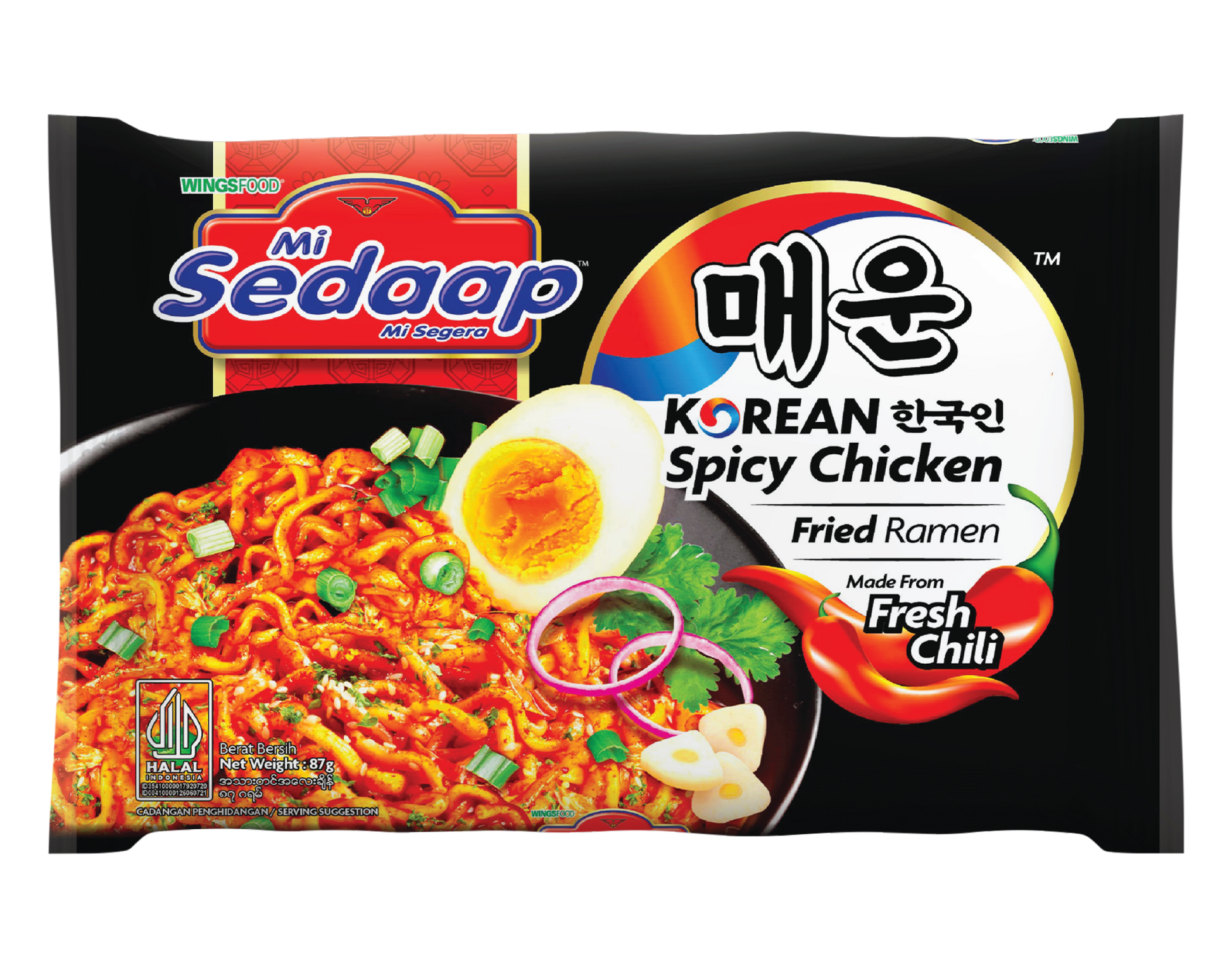
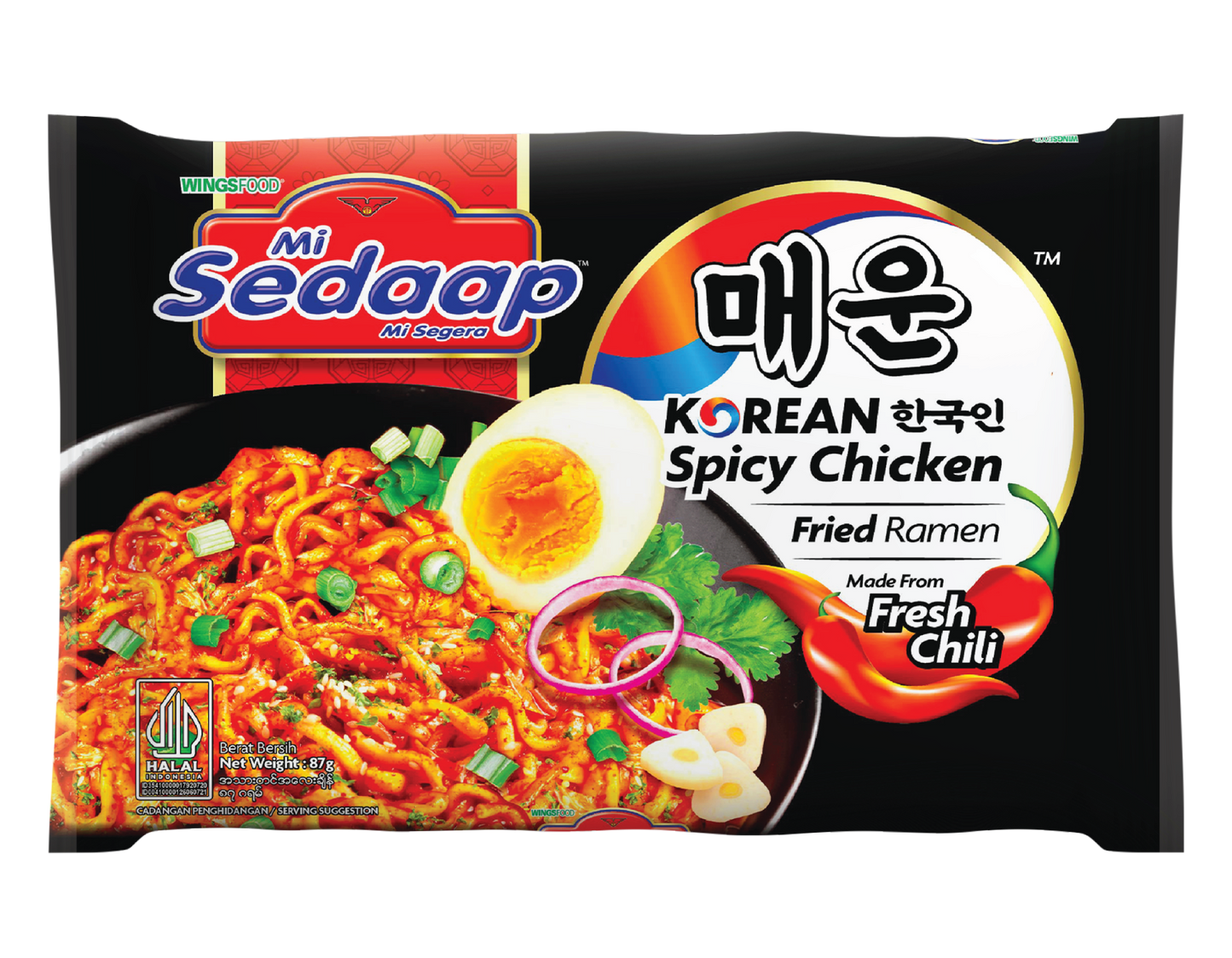
Mi Sedaap instant noodles deliver a layered, seasoned base that removes the need for separate cheese powder for ramen, dry ramen snack components, or redundant seasoning investment. Variants like Mi Sedaap Korean Spicy Chicken bring bold Korean-style heat with a savory chicken base and dried seaweed topping. The Mi Sedaap Korean Cheese Buldak Spicy offers that buldak cheese experience with creamy umami depth. The Singaporean Spicy Laksa variant brings a coconut broth richness that would cost significantly more to build from scratch using instant laksa components.
These are not stripped-down shortcuts. These are best instant noodle platforms that give operators a consistent, certified foundation to build on.
Time-to-Plate Comparison and Kitchen Throughput Gains
Mi Sedaap noodles are ready in 5 minutes. A scratch noodle build, from prep to plate, can run 18 to 25 minutes. For ghost kitchens managing delivery windows, that difference in time-to-plate directly affects ticket ratings and reorder rates. Operators using instant ramen egg upgrades, buldak toppings, or a best way to add egg to ramen technique can elevate the plate in under two additional minutes, keeping tickets moving and customers returning.
Menu Versatility and Flavor Positioning With Mi Sedaap
Scaling Across Multiple Virtual Restaurant Concepts
Mi noodles from the Mi Sedaap lineup cover enough ground to support several distinct virtual brands from a single kitchen. A spicy noodle brand can run on Korean Spicy Chicken or Spicylicious. A comfort bowl concept fits perfectly around Soto Mie or the Grilled Chicken with Lime. A spicy carbonara noodles concept or cream carbonara ramen build works around the Korean Cheese Buldak Spicy. The mi goreng ramen format anchors an Indonesian street food angle with Original Fried Noodles, complete with crispy fried onion topping.
How Mi Sedaap Flavor Profiles Reduce Seasoning Investment
Each variant ships with its seasoning system integrated, from the dual-chili green chili sauce in Spicylicious to the aromatic lime leaf profile in Soto Mie. This eliminates redundant purchases like standalone spicy ramen noodles seasoning kits, buldak carbonara seasoning, or separate carbonara ramen buldak components. Operators building mie sedaap noodles concepts into their menu reduce both SKU complexity and waste in a single move.
Sourcing Mi Sedaap in Bulk: Distributors and Wholesale Options for Ghost Kitchens
Ghost kitchens ready to commit to Mi Sedaap as a menu base need a reliable, high-volume supply chain. The first step is straightforward:Shop Mi Sedaap Wholesale to explore bulk purchasing options, case pricing, and direct distributor relationships built for commercial operators. This is the most direct path for operators who need consistent inventory without retail markup eating into food cost.
Finding Asian Food Distributors and Food Wholesalers in the USA
Operators asking about food distributors near me or searching for a wholesale asian food distributors usa network should begin with established importers who specialize in Southeast Asian and Korean-style products. Partnering with an experiencedAsian Food Distributor like Jans Food gives ghost kitchen operators access to a vetted channel for Indonesian food importer relationships, asian grocery distributor services, and food wholesaler connections built around commercial volume.
For operators needing broader reach, international wholesalers corporation networks and wholesale distributors with established asian food distributors relationships can provide consistent noodles in usa fulfillment across multiple states.
FAQ
What is the average per-serving cost difference between a scratch noodle dish and a Mi Sedaap-based dish in a ghost kitchen?
Scratch noodle builds typically cost $2.90 to $4.60 per serving when ingredient and labor costs are combined. A Mi Sedaap-based dish, including light toppings and an instant ramen egg upgrade, comes in at $0.65 to $1.25 per serving. That margin difference is significant at volume.
Can Mi Sedaap noodles handle the volume and customization demands of a commercial ghost kitchen menu?
Yes. Sedaap noodles are produced to ISO 22000 and HACCP standards, making them compliant with commercial kitchen requirements. Their consistent cook time and pre-built seasoning systems allow operators to customize with proteins, buldak toppings, or a korean noodle cup format without losing speed.
How much labor time can ghost kitchen operators save by using instant noodle bases like Mi Sedaap compared to scratch cooking?
Operators typically save 15 to 20 minutes per serving compared to scratch builds. At scale, this translates to measurable throughput gains during peak delivery windows.
Where can ghost kitchens and virtual restaurant operators source Mi Sedaap in bulk across the USA?
Operators can source directly through misedaapusa.com or through indonesian food importer and food wholesaler partners. Korean instant noodle and spicy noodles buldak adjacent products from Mi Sedaap are increasingly available through regional asian grocery distributor networks as well.
Does using Mi Sedaap as a menu base affect the perceived quality or brand positioning of a ghost kitchen concept?
No. Consumers ordering spicy noodles, buldak cheesy ramen, or instant noodle tom yum from a ghost kitchen evaluate the dish on flavor, heat, and value. Mi Sedaap variants like the cup noodles korean-style format, instant noodle snack upgrades, and korean hot chicken noodle builds deliver on all three without signaling compromise.