
Returning Customer Rate 29.4 Percent: What That Number Means for Your Shelf Space Decision
Why Returning Customer Rate Is the Metric Retail Buyers Cannot Ignore
You are staring at a shelf reset spreadsheet. Your merchandise director wants justification for every new SKU addition. First-sale velocity looks attractive on paper, but velocity alone tells you how well a launch was marketed, not how well a product actually performs. Repeat purchase data tells you something more valuable. It tells you whether real people came back.
How Repeat Purchase Data Outperforms First-Sale Velocity in Shelf Performance
First-sale velocity measures momentum driven by placement, promotion, and novelty. It spikes at launch and often collapses within two quarters. Returning customer rate measures loyalty, the percentage of buyers who finished the product, evaluated it against every competing option on your shelf, and chose it again. For category managers working in food and beverage, that distinction carries direct financial weight. A brand with a 10 percent returning customer rate requires constant new customer acquisition to maintain volume. A brand posting a 29.4 percent returning customer rate is already building a base that compounds over time without additional promotional spend on your end.
What a 29.4 Percent Returning Customer Rate Actually Signals to Category Managers
In the context of instant noodle returning customer rate retail performance, 29.4 percent is not a benchmark you see from brands in their first years of US distribution. It signals that the product experience is strong enough to override consumer inertia. It signals that buyers in the diaspora community and crossover consumers who discovered the brand through social commerce are converting into habitual purchasers. For a category manager, that is the difference between a SKU that needs to be managed and a SKU that manages itself.
The Financial Risk Calculation Behind Allocating Shelf Space to Emerging Ethnic Food Brands
Every shelf space decision is a capital allocation decision. Facings cost money in lost opportunity from brands that do not perform. When you add a new instant noodle SKU from an emerging brand, your merchandising director is running the same mental math: what is the probability this product turns consistently enough to justify the space?
How Retailers Quantify Risk When Adding New Instant Noodle SKUs
The standard risk variables are trial rate, repeat rate, and basket contribution. Trial rate gets you in the door. Repeat rate keeps you there. Basket contribution tells you whether the product draws incremental spend or simply cannibalizes existing volume. Ethnic food brands with strong diaspora anchoring consistently demonstrate more stable repeat rates than trend-driven launches because their core customer is not discovering the product, they are returning to something familiar. That stability is what makes the risk calculation more favorable.
Why Diaspora and Crossover Consumer Demand Stabilizes Repeat Purchase Rates for Asian Noodle Brands
The Indonesian diaspora in the United States represents a committed repeat-purchase base. Combined with the broader crossover appetite for bold Southeast Asian flavor profiles, spicy noodles, and authentic regional formats like instant laksa and mi goreng ramen, the addressable repeat-purchase pool is larger than most buyers expect. Products like halal noodles and indomie mi goreng have already educated American consumers on Indonesian flavor profiles. That cultural priming benefits every brand operating in the same category, including Mi Sedaap USA, which now arrives in the market with its own distinct identity and a documented 29.4 percent returning customer rate to back it up.
Mi Sedaap USA Performance Data and How It Compares in the US Instant Noodle Category
Where Mi Sedaap Sits Against Mainstream Competitors in Returning Customer Behavior
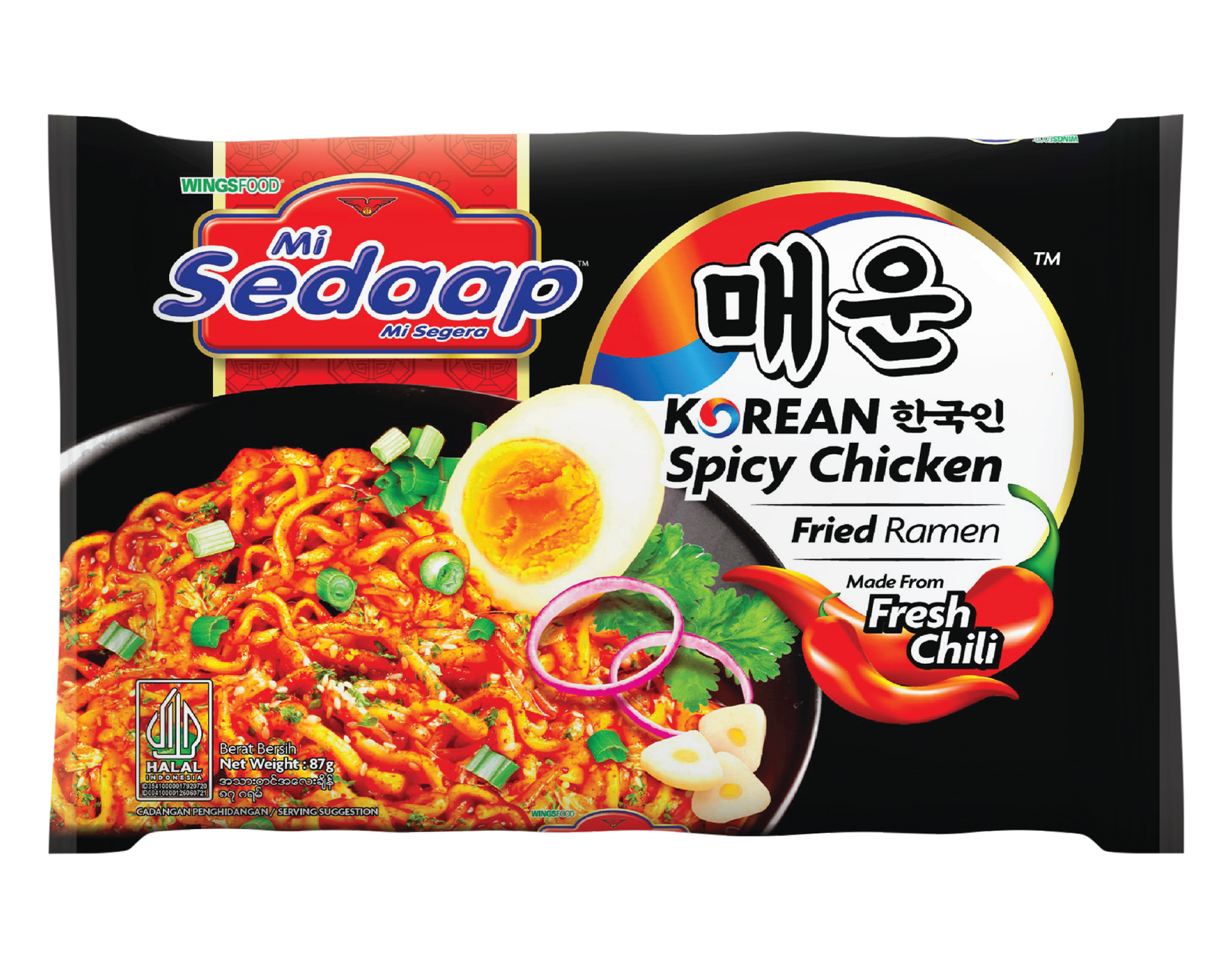
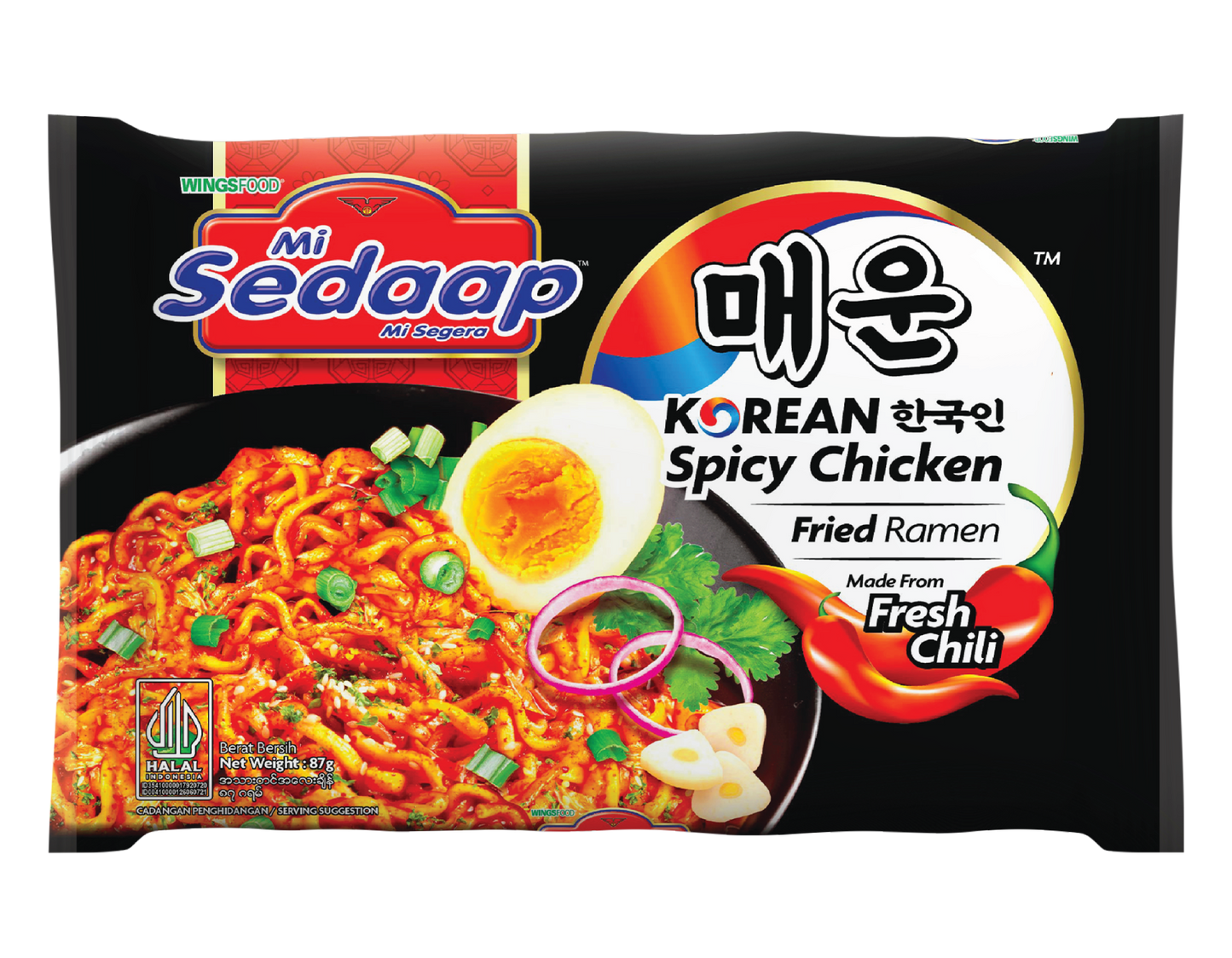
The US instant noodle category is not monolithic. Korean instant noodles, spicy ramen noodles, cup noodle formats, and Southeast Asian variants each serve partially overlapping but distinct consumer segments. Korean hot chicken noodle products, buldak spicy noodles, buldak cheese, buldak cheesy ramen, cream carbonara ramen, and buldak toppings have created massive awareness for bold Asian noodle formats. Mi Sedaap USA operates in that cultural current while offering its own certified, authentic product line that includes Korean Cheese Buldak Spicy, Korean Spicy Chicken, and Singaporean Spicy Laksa formats. Its returning customer rate of 29.4 percent positions it competitively against established korean instant noodle brands without requiring the promotional infrastructure those brands carry.
Product Range Breadth as a Driver of Basket Repeat Value for Retail Accounts
Mi Sedaap USA currently offers ten distinct SKUs spanning cup formats and bag formats, broth and dry noodle styles, and flavor profiles from spicy to savory to citrus-forward. That breadth matters for basket repeat value.
|
Product |
Format |
Key Flavor Profile |
|---|---|---|
|
Mi Sedaap Cup Korean Spicy Chicken |
Cup |
Bold Korean-style spicy chicken, seaweed topping |
|
Mi Sedaap Cup Original Fried |
Cup |
Sweet savory, crispy fried onion |
|
Mi Sedaap Cup Soto |
Cup |
Light savory chicken, aromatic citrus spice |
|
Mi Sedaap Grilled Chicken with Lime |
Bag |
Grilled chicken, lime leaf freshness |
|
Mi Sedaap Korean Cheese Buldak Spicy |
Bag |
Buldak-style heat, creamy cheese |
|
Mi Sedaap Korean Spicy Chicken |
Bag |
Korean spicy chicken, seaweed, umami |
|
Mi Sedaap Original Fried Noodles |
Bag |
Sweet savory, fried onion, umami |
|
Mi Sedaap Singaporean Spicy Laksa |
Bag |
Creamy coconut broth, laksa spice blend |
|
Mi Sedaap Soto Mie |
Bag |
Classic soto broth, lime leaf, aromatic spice |
|
Mi Sedaap Spicylicious |
Bag |
Dual chili, green chili sauce, crispy onion |
A consumer who enters on buldak cheesy flavor might trial the instant laksa next. That cross-SKU behavior within a single brand compounds your category dollars significantly.
How Repeat Purchase Rates Translate Into Direct ROI for Grocery Buyers and Category Managers
Calculating Per-SKU Revenue Stability Using Returning Customer Benchmarks
Revenue stability per SKU is directly proportional to repeat rate. At 29.4 percent, roughly three in ten customers who purchase Mi Sedaap USA products return for a second purchase without any additional retailer-side investment in promotion, display, or markdown. For a food wholesaler or wholesale food distributor managing dozens of accounts, that baseline predictability compresses your reorder planning cycle and reduces stockout risk on your end.
Why Halal Certification and Multi-Flavor Variety Compound Repeat Purchase Rates
Every Mi Sedaap product carries Halal Certification from MUI, alongside ISO 22000 and HACCP compliance. In the US retail context, halal certification is increasingly a mainstream purchasing criterion, not limited to religious shoppers. Combined with a flavor portfolio that includes spicy noodle formats, dry ramen snack styles, noodle snacks, and soup-forward profiles, the certification amplifies repeat rate by keeping the brand accessible to the widest possible consumer pool. Buyers who require halal noodles as a household standard become repeat purchasers by default when the flavor variety also meets their preference. Seasoning mix brands for Gen Z consumers specifically respond to bold format variety, and the Mi Sedaap range delivers that without requiring a flavor compromise.
Making the Shelf Space Decision: Data Points That Support Stocking Mi Sedaap USA
What Wholesale and Distribution Access Looks Like for Retail Buyers
Mi Sedaap USA products are currently available through the brand website, Amazon, and TikTok Shop, with retail placement at 99 Ranch and Asian markets already established. For grocery buyers and category managers looking to initiate a wholesale order or explore full product availability across all ten SKUs, Shop Mi Sedaap Wholesale provides direct access to wholesale purchasing options designed for retail accounts. The sourcing path is straightforward, and volume minimums are structured to work for both regional grocery chains and independent specialty retailers.
For retailers who prefer to work within established distribution infrastructure, sourcing Mi Sedaap through an Asian Food Distributor network is a practical route. Established wholesale asian food distributors and oriental wholesale food distributors already carry the logistics relationships, compliance documentation, and regional reach needed to place noodles in usa retail environments efficiently. Working through asian food distributors reduces onboarding friction significantly for buyers unfamiliar with sourcing from Southeast Asian brands.
Building a Category Case for Southeast Asian Instant Noodles in US Grocery Retail
The instant noodle usa market is expanding beyond Korean and Japanese dominant formats. Consumers buying spicy noodles buldak, korean soup packets, cup noodles korean, cream carbonara buldak noodles, and cheese powder for ramen are already conditioned to explore bold Asian noodle formats. The best instant noodle on a shelf reset spreadsheet is the one that earns its space through documented repeat behavior. Mi Sedaap USA brings that documentation in the form of a 29.4 percent returning customer rate, full halal and food safety certification, a ten-SKU portfolio covering bowl noodles, dry formats, and broth styles, and an established retail footprint at the asian wholesale market and asian foods wholesale level. This is not a trend bet. It is a calculated category move grounded in data that most emerging instant noodle snack brands cannot produce.
Frequently Asked Questions
What is a good returning customer rate for food brands in US retail and how does 29.4 percent compare to category benchmarks for instant noodles?
Average returning customer rates for consumer packaged food brands in US e-commerce typically range between 15 and 25 percent. For instant noodles, a category with high competition from established korean instant noodles spicy formats, korean spicy noodles instant, and spiciest noodles korean products, sustained rates above 25 percent indicate genuine product loyalty rather than trial-driven volume. At 29.4 percent, Mi Sedaap USA performs above that general benchmark, suggesting that mie sedaap noodles and mi sedaap noodles hold consumer attention beyond initial purchase.
How does a high returning customer rate directly affect shelf space allocation decisions for grocery buyers and category managers?
A higher returning customer rate reduces the promotional burden on the retailer. Brands like sedaap noodles that demonstrate organic repeat behavior require fewer markdown events, less display support, and fewer promotional dollars to maintain velocity. For a category manager, that translates directly into better margin per facing. The shelf space decision becomes easier when the data shows that the product drives its own reorder cycle.
Can retailers and wholesale distributors order Mi Sedaap USA products in bulk and what does the wholesale purchasing process look like?
Yes. Mi Sedaap USA supports wholesale purchasing for retail buyers and food and beverage distributors. Buyers can access wholesale ordering options directly through the brand or connect through established wholesale distributors and wholesale asian food distributors already stocking the product line. The process is designed to accommodate both direct retail accounts and multi-tier distribution relationships.
How do ethnic food brands like Mi Sedaap compete for shelf space against established instant ramen noodles brands in American supermarkets?
Mie sedaap noodles compete on flavor authenticity, format variety, and certification compliance rather than marketing spend alone. In categories where korean noodle cup formats and spicy ramen noodles dominate shelf real estate, sedaap differentiates through halal certification, Southeast Asian flavor profiles including mi goreng ramen and instant laksa, and documented repeat purchase performance that most emerging brands cannot substantiate.
Is Mi Sedaap available through Asian food distributors and wholesale channels for grocery stores looking to stock Southeast Asian instant noodles?
Yes. Mi sedaap is accessible through the asian wholesale market and established wholesale channels. Grocery stores and specialty retailers can source noodles in usa distribution through asian food distributors with existing relationships in the oriental wholesale food distributors network. This makes onboarding straightforward for buyers adding Southeast Asian instant noodles to their category set.