
The Halal-Certified Noodle Gap Most Asian Grocery Buyers Dont Realize Exists
Why Halal Certification in Asian Noodles Is More Complex Than Buyers Assume
Walk down any Asian grocery aisle in the United States and you will find dozens of instant noodle SKUs. Ramen noodles, spicy noodles, cup noodle formats, mi goreng ramen styles, instant laksa, even cream carbonara ramen. What you will rarely find is a clearly certified halal product that meets the documentation standards procurement teams actually need.
The Difference Between Halal-Friendly and Truly Halal Certified Instant Noodles
There is a real and consequential difference between a product that avoids pork ingredients and a product that carries verified halal certification backed by a recognized body. Many instant noodle snack products on shelves today fall into a gray zone. They may not contain obvious haram ingredients, but they lack formal certification, traceable supply chain documentation, or recognized third-party oversight. For a retail buyer or foodservice director sourcing at scale, that gray zone is a liability, not a solution.
Truly halal certified products carry documentation from an accredited certifying authority. This matters for Muslim consumer trust, retail compliance in certain markets, and institutional foodservice contracts that require verified halal sourcing.
How Indonesian Halal Standards Like MUI Compare to US Domestic Certifications
Indonesia is home to the Majelis Ulama Indonesia, known as MUI, which operates one of the most rigorous and globally recognized halal certification frameworks in the world. MUI certification covers the entire production process, from ingredient sourcing through manufacturing controls and packaging integrity. Many US domestic halal certifications are valid, but MUI carries particular weight within Southeast Asian Muslim communities and is increasingly recognized by procurement teams familiar with Asian food imports.
When sourcing halal noodles through wholesale asian food distributors, buyers should ask specifically whether certification comes from MUI or another internationally recognized body, not simply whether a product is labeled halal-friendly.
What Procurement Teams and Retail Buyers Need to Verify Before Stocking a Product
Before stocking any instant noodle usa product in a certified halal context, buyers should verify the certifying body, confirm certification is current and not lapsed, check whether the certification applies to the specific SKU being purchased, and ensure import documentation aligns with the product's country of origin certification. These steps are not optional for buyers serving halal-conscious retail customers or institutional foodservice operators.
The Distribution Gap Costing Asian Grocery Retailers a Significant Revenue Opportunity
Where Halal Noodle Demand Exists in US Asian Grocery Channels Today
Demand for certified halal noodles in USA markets is not a future trend. It exists today, concentrated in metro areas with dense Muslim consumer populations and crossover demand from health-conscious shoppers who use halal certification as a quality proxy. Indonesian, Malay, South Asian, and Arab American shoppers actively seek halal-certified noodle options when shopping asian wholesale grocery channels. That demand is currently underserved.
Why Mainstream Asian Grocery Chains Understock Certified Halal Noodle SKUs
The reason asian food distributor california networks and national chains understock certified halal noodle options is partly historical and partly structural. Buying decisions in Asian grocery retail have long been driven by Korean instant noodle momentum, particularly buldak spicy noodles, buldak cheese, buldak cheesy ramen, and spicy noodles buldak variants that dominate trending snack categories. Korean hot chicken noodle products, cream carbonara buldak noodles, and buldak cheesy formats have captured buyer attention across retail and foodservice channels.
What gets lost in that noise is a certified halal product that can serve the same craving for bold, spicy, satisfying noodles in a noodle snack format while meeting a compliance standard that korean instant noodle products typically do not carry.
How the Muslim Consumer Segment Fits Into the Broader Asian Grocery Buyer Profile
Muslim consumers in the United States represent a purchasing segment that skews young, urban, and highly engaged with food trends. They follow the same korean spicy noodles instant trends, the same interest in korean noodle cup formats, and the same appetite for the spiciest noodles korean-style heat. The difference is they need certified halal verification to purchase with confidence. Asian grocery buyers who stock certified halal options alongside trending spicy ramen noodles and korean instant noodles spicy formats capture both segments simultaneously.
Mi Sedaap USA as a Scalable Halal Noodle Solution for Foodservice and Retail Buyers
Product Range Overview Covering Spicy Noodles Cup Formats and Mi Goreng Styles
Mi Sedaap noodles deliver across multiple format categories that retail and foodservice buyers need. The mie sedaap noodles lineup includes bowl noodles, cup formats, and dry noodle packs. Here is a structured view of the core SKUs available through Mi Sedaap USA:
|
Product |
Format |
Key Flavor Profile |
|---|---|---|
|
Mi Sedaap Cup Korean Spicy Chicken |
Cup Noodle |
Korean-style spicy chicken, seaweed topping, umami heat |
|
Mi Sedaap Cup Original Fried |
Cup Noodle |
Sweet savory, crispy fried onion, authentic Indonesian style |
|
Mi Sedaap Cup Soto |
Cup Noodle |
Light soto broth, aromatic spices, citrus lift |
|
Mi Sedaap Korean Cheese Buldak Spicy |
Dry Pack |
Buldak-style heat with creamy cheese coating |
|
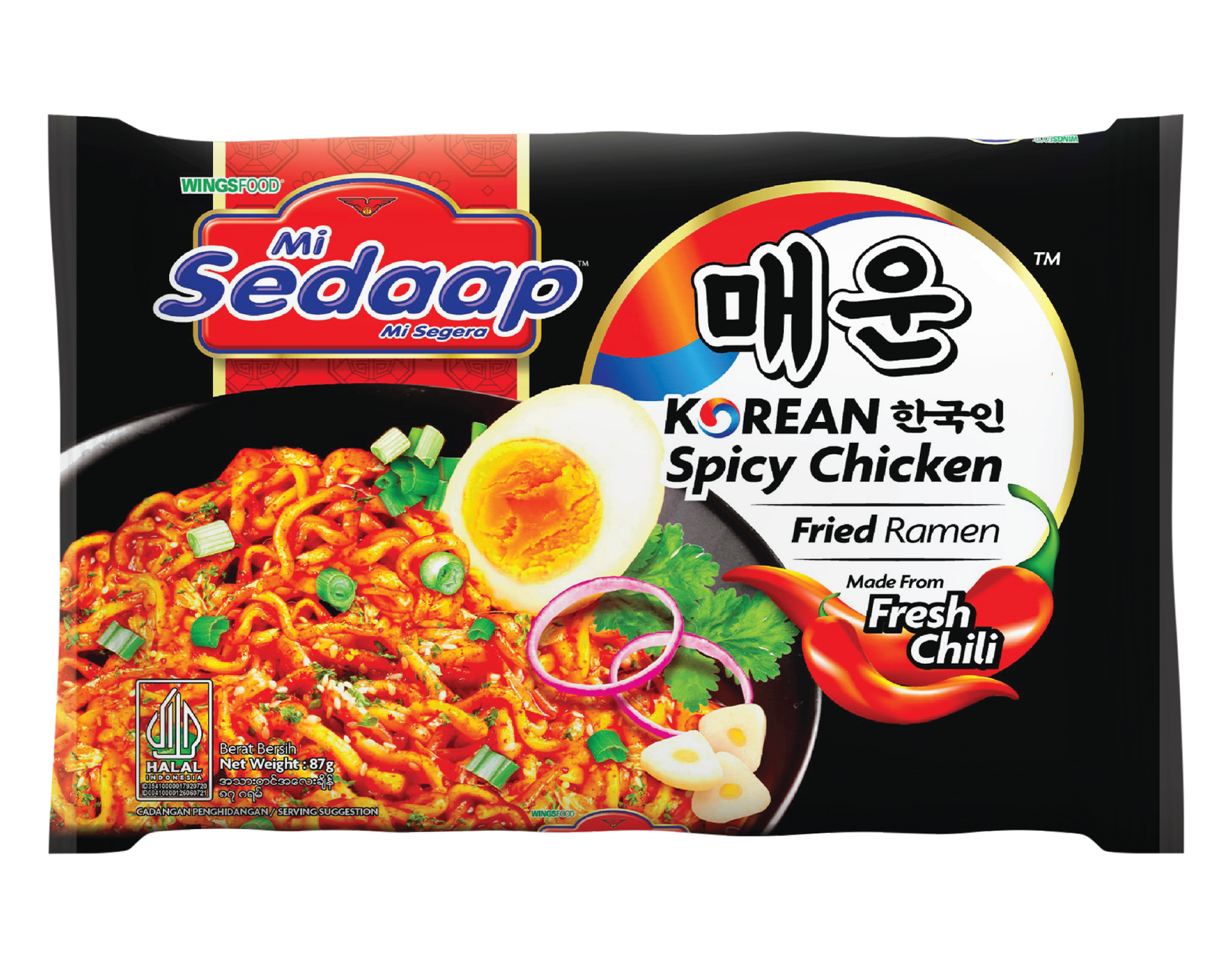
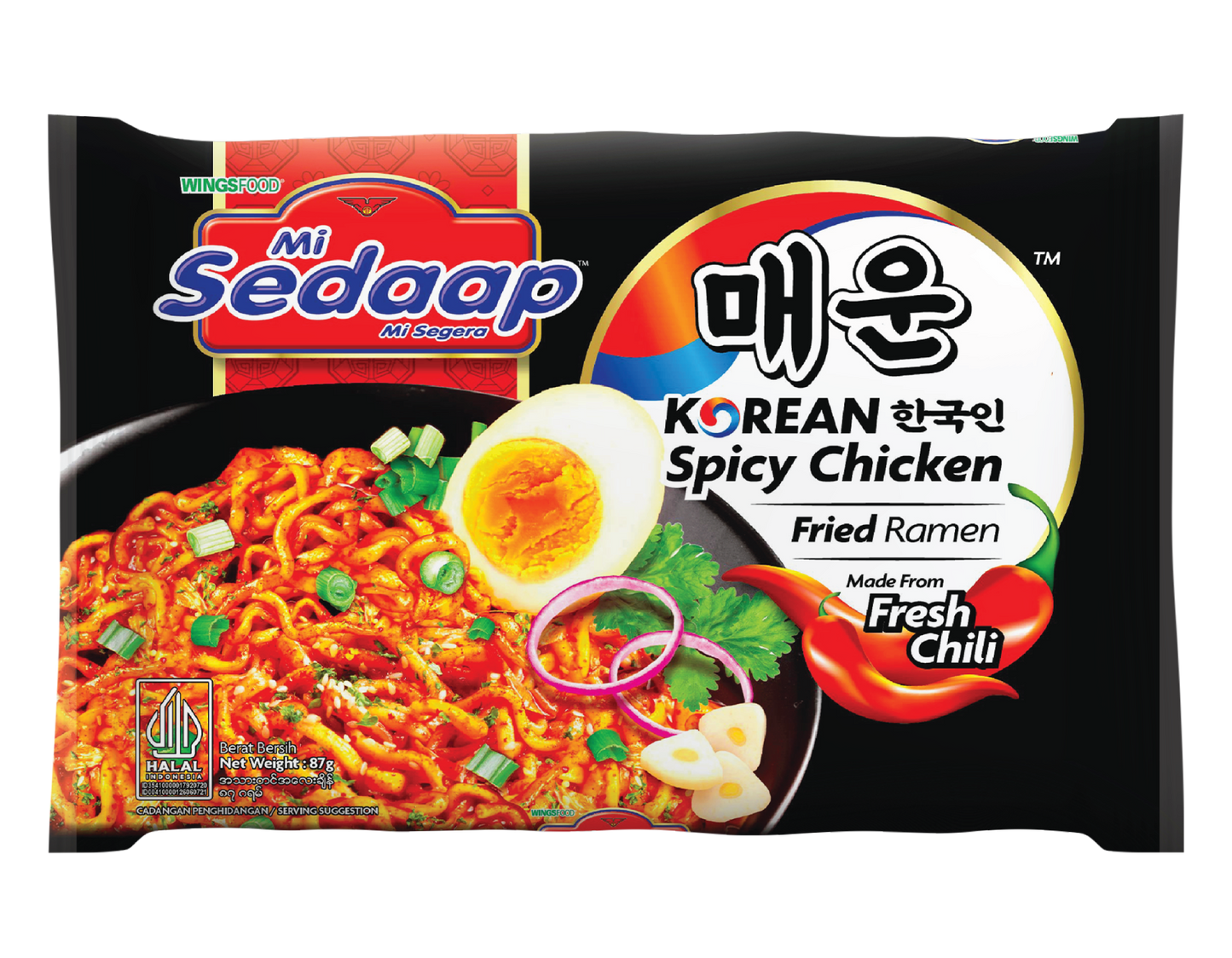
Mi Sedaap Korean Spicy Chicken |
Dry Pack |
Bold spicy chicken, seaweed, slight sweetness |
|
Mi Sedaap Original Fried Noodles |
Dry Pack |
Signature fried onion, sweet savory umami |
|
Mi Sedaap Singaporean Spicy Laksa |
Dry Pack |
Creamy coconut broth, laksa spice, balanced heat |
|
Mi Sedaap Soto Mie |
Dry Pack |
Classic soto, lime leaf citrus, comforting |
|
Mi Sedaap Spicylicious |
Dry Pack |
Dual chili, green chili sauce, sharp heat |
|
Mi Sedaap Grilled Chicken with Lime |
Dry Pack |
Grilled chicken, lime leaf freshness, crispy onion |
Every sedaap noodles SKU carries MUI halal certification, ISO 22000, and HACCP compliance. That certification stack positions mi sedaap noodles as a best instant noodle category addition for buyers who need both demand and documentation.
Certifications That Make Mi Sedaap a Low-Risk High-Demand Wholesale Addition
The combination of MUI halal, ISO 22000 food safety management, and HACCP controls means mie sedaap noodles arrive shelf-ready with the compliance backing retail buyers and foodservice operators need. This is not a dry ramen snack without a paper trail. It is a documented, certified product that procurement teams can stock with confidence alongside indomie mi goreng and other established asian food imports.
For buyers tracking seasoning mix brands for gen z and younger demographics, the cheese powder for ramen appeal in the Korean Cheese Buldak Spicy variant, plus buldak toppings-style positioning, makes sedaap a category driver, not a category filler.
Where and How to Source Mi Sedaap Through Established Asian Food Distributors
Retail buyers and foodservice directors can Shop Mi Sedaap Wholesale directly through the Mi Sedaap USA platform to explore bulk purchasing options, review available SKUs, and initiate wholesale inquiries. Products are available through Amazon, TikTok Shop, and at 99 Ranch and select Asian markets nationwide.
B2B Sourcing Strategy for Wholesale Buyers Entering the Halal Instant Noodle Category
How Wholesale Asian Food Distributors Can Position Halal Noodles as a Category Driver
A food wholesaler entering the halal instant noodle category has a clear positioning advantage when carrying certified SKUs. Halal noodles function as a category expansion tool within asian wholesale grocery, not a replacement for existing korean soup packets or spicy noodle bestsellers. The goal is additive shelf presence that serves a verified demand segment.
Key Considerations for Foodservice Operators Sourcing Halal Certified Noodles at Scale
Foodservice operators sourcing instant ramen noodles at scale should confirm that certification documentation accompanies each shipment, verify that the snack distributor relationship includes reorder reliability, and ensure the selected SKUs match their menu or meal kit format needs. Cup noodles korean-style formats and dry packs both work in institutional settings depending on prep infrastructure.
Partnering With the Right Indonesian Food Distributor USA Network for Reliable Supply
Connecting with an established Asian Food Distributor network is the most efficient path to reliable, recurring supply of Mi Sedaap and comparable asian food imports. Wholesale distributors with existing Indonesian food distributor USA relationships can move Mi Sedaap product consistently and manage minimum order quantities at the volume retail and foodservice buyers require.
FAQ
What certifications should wholesale buyers look for when sourcing halal noodles from Asian brands?
Buyers should prioritize products certified by MUI or another internationally recognized halal authority. Additionally, look for ISO 22000 food safety certification and HACCP compliance. These three combined provide the documentation backbone needed for retail compliance and foodservice contracts. Mi Sedaap carries all three across its full SKU range.
How can retailers verify that imported instant noodles like Mi Sedaap meet US halal compliance expectations?
Request the halal certificate directly from the supplier or distributor and confirm the certifying body is recognized. For mie sedaap noodles, MUI certification is current and applies to each product in the lineup. Retailers should also confirm that import documentation from the asian food imports chain matches the product's country of origin certification records.
Is Mi Sedaap USA available through wholesale distributors for bulk foodservice and retail orders?
Yes. Mi Sedaap is available through wholesale asian food distributors and directly through the Mi Sedaap USA platform for bulk orders. Products are also stocked at 99 Ranch and select Asian markets, with availability through Amazon and TikTok Shop for smaller volume testing before committing to wholesale quantities.
What makes Mi Sedaap a competitive option compared to other spicy noodles and buldak-style products in the halal segment?
Mi Sedaap delivers buldak-style heat profiles, including the Korean Cheese Buldak Spicy variant with creamy cheese coating, alongside certified halal status that most korean hot chicken noodle and buldak cheesy competitors cannot match. For buyers serving Muslim consumers who want korean instant noodle experiences, mi noodles from Mi Sedaap fill that gap with certification precision.
How do Asian food distributor California networks handle minimum order quantities for halal-certified noodle products?
Asian food distributor california networks typically set minimum order quantities based on case volume per SKU. Buyers should contact their distributor directly to confirm thresholds. Working with an established Indonesian food distributor USA partner simplifies this process and ensures consistent replenishment cycles for high-velocity halal noodle SKUs.