
The Indonesian Diaspora Is a Bigger Market Than Most Mainstream Retailers Realize
Quantifying the Indonesian Diaspora Market in the United States
How Many Indonesians Live in the US and Where Are They Concentrated
The United States is home to an estimated 100,000 to 150,000 Indonesian-born immigrants, with a broader community of Indonesian-heritage residents pushing that figure significantly higher when second-generation households are counted. Major concentrations exist in Southern California, the San Francisco Bay Area, New York and New Jersey, Houston, Seattle, and Phoenix. These are not peripheral locations. These are cities where your stores already operate and where basket data is already being collected without the diaspora ever being segmented properly.
This community skews educated, dual-income, and brand-loyal in ways that most category managers have not yet mapped. Indonesian consumers abroad do not passively adapt to whatever is on shelf. They actively seek out familiar products, and when they cannot find them, they spend online at a premium.
Purchasing Power and Food Spending Patterns Among Indonesian Expats
Indonesian expat households in the US tend to prioritize food authenticity at a level that directly translates to repeat purchase behavior. Food spending for diaspora consumers frequently indexes higher than their non-immigrant peers in the same income bracket. These shoppers will drive further, pay more per unit, and return more consistently to a store that stocks what they need. For a retailer, that means lower churn, higher visit frequency, and stronger category attachment once the right products are on shelf.
Why Mainstream Retailers Are Leaving Revenue on the Table
The gap is structural, not accidental. Most mainstream retailers build their Asian food sets around the highest-volume East Asian categories, primarily Korean and Japanese. Indonesian products, including brands like Mi Sedaap, get excluded by default rather than by any demand analysis. The result is that Indonesian diaspora shoppers, along with the much larger cohort of adventurous American consumers who discovered bold Southeast Asian flavors through social media, are routing their spending to specialty Asian wholesale markets and online platforms. That revenue exists. It is simply going somewhere else right now.
What Indonesian Diaspora Shoppers Are Actually Buying
Top Indonesian Food Products Driving Demand in the US
The most consistent demand signal from Indonesian diaspora households points toward instant noodles as a staple repurchase category. Products like indomie mi goreng and bowl noodles occupy significant pantry share, but the category has expanded. Korean-influenced formats including spicy noodles, spicy ramen noodles, and cup noodle formats now sit alongside traditional Indonesian styles. Shoppers are also responding to products that cross flavor territories, such as instant laksa, cream carbonara ramen, and buldak spicy noodles variants that deliver familiar comfort in new formats. Dry ramen snack formats and noodle snacks are also gaining traction as grab-and-go options.
How Mi Sedaap USA Fits Into the Diaspora Shopping Basket
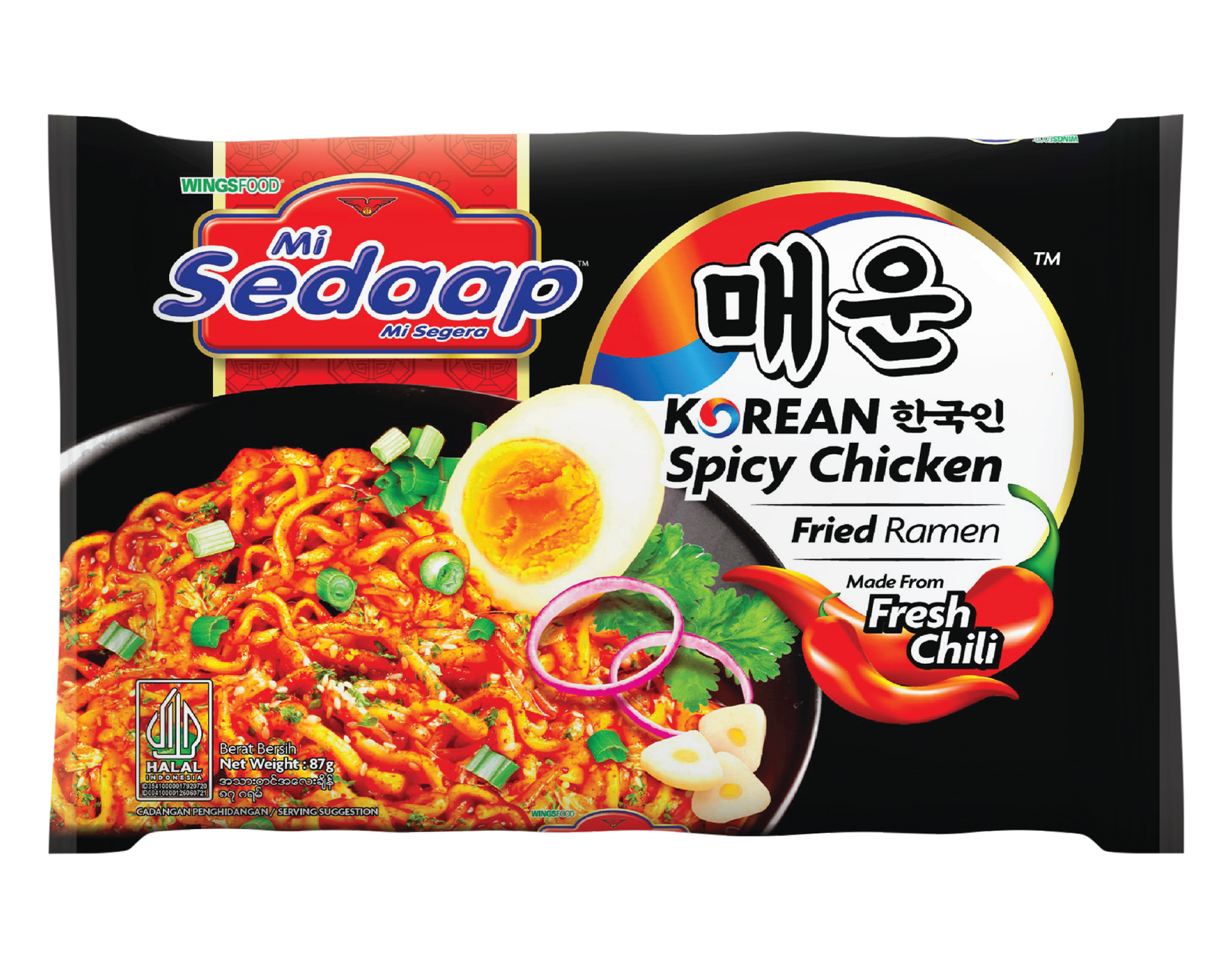
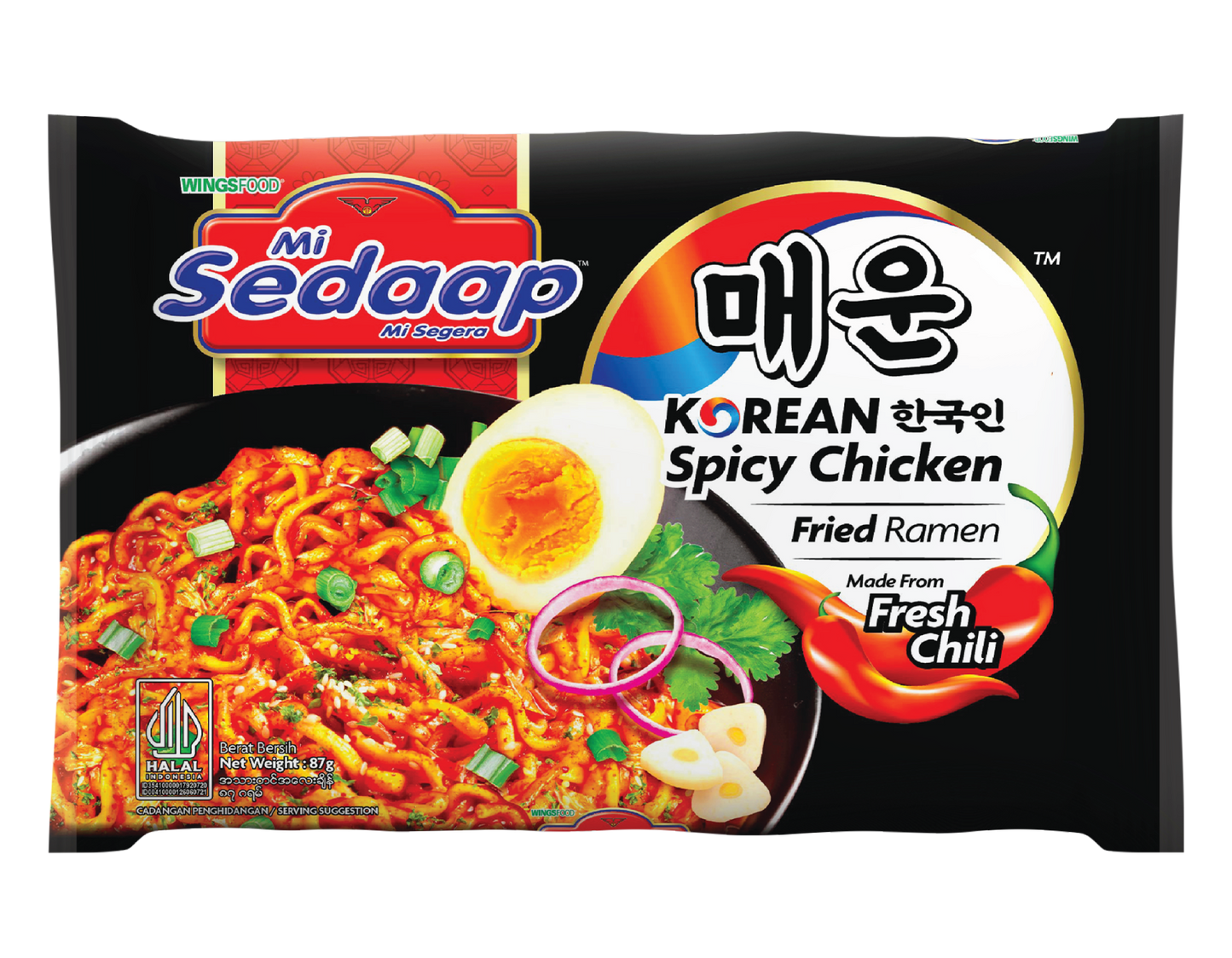
Mi Sedaap noodles occupy a specific and defensible position in this basket. The brand delivers authentic Indonesian-style fried noodles alongside Korean-inspired formats, giving retailers a single SKU family that covers multiple consumption occasions. The Mi Sedaap Korean Spicy Chicken delivers bold heat with dried seaweed topping and a savory umami base. The Mi Sedaap Korean Cheese Buldak Spicy brings a buldak cheesy experience that sits comfortably alongside buldak cheese trends without replicating them. The Mi Sedaap Singaporean Spicy Laksa offers an instant laksa option with creamy coconut broth and aromatic spice depth. Mie sedaap noodles, also referenced as sedaap noodles or simply sedaap among community buyers, carry strong brand recognition that accelerates trial and drives repeat purchase in the same transaction cycle.
The Role of Halal Certification in Purchasing Decisions
Halal certification is not a secondary consideration for Indonesian diaspora shoppers. It is a primary filter. Mi Sedaap products carry MUI Halal certification alongside ISO 22000 and HACCP compliance, which means they meet the standards required for halal grocery placement as well as mainstream retail compliance requirements. For a buyer managing a diverse store set, this certification stack reduces placement risk while opening access to a broader Muslim consumer base well beyond the Indonesian community alone. Halal noodles in this certification tier are still underrepresented in mainstream grocery, and the gap is a commercial opening.
The B2B Opportunity for Retailers and Distributors
Why Stocking Indonesian Brands Creates Competitive Differentiation
The Asian food category in US retail is no longer a monolith. Korean instant noodle demand has proven that spicy noodles sell broadly across demographics. Korean spicy noodles instant, korean hot chicken noodle, and spiciest noodles korean formats have demonstrated crossover appeal far beyond the Korean diaspora. Indonesian brands are positioned to follow the same trajectory, with an added advantage. Products like mi goreng ramen and mie sedaap noodles in usa are already familiar to millions of consumers through digital discovery. Retailers that stock them first build loyalty with a consumer who rarely switches once they find a consistent source. That is competitive differentiation with a long tail.
How to Onboard an Indonesian Food Distributor USA
For retailers who want to move quickly, the most efficient path is through an established distribution partner with existing infrastructure in Asian food and beverage. Working with an Asian Food Distributor like Jans Food connects buyers to verified Indonesian food distributor USA channels, reduces import complexity, and accelerates shelf-ready timelines. Oriental wholesale food distributors and asian food distributors with Southeast Asian specialty experience already carry the compliance documentation and cold-chain or ambient logistics that retail buyers need. The category entry cost is lower than most buyers assume, and the demand-side risk is already de-risked by demonstrable community purchasing data.
Regional Retail Hotspots Where Demand Is Already Proven
Southern California, specifically the greater Los Angeles corridor, represents the single strongest retail opportunity for Indonesian food products in the US. The Bay Area follows closely, with Houston and the New York metro rounding out the top four. These markets already have operating asian wholesale market infrastructure, and Asian foods wholesale movement in these regions confirms that demand is not latent. It is active and growing.
How Mi Sedaap USA Supports Retail and Wholesale Partners
Product Range Built for Shelf Performance and Category Breadth
Mi Sedaap USA offers a product range designed to perform across multiple retail formats. From the Mi Sedaap Original Fried Noodles with signature crispy fried onion topping, to the Mi Sedaap Spicylicious with its dual-chili experience, to the Mi Sedaap Cup Soto with aromatic lime leaf lift, the lineup covers flavor profiles that serve diaspora loyalists and curious mainstream shoppers alike. Best instant noodle positioning is increasingly competitive, and Mi Sedaap holds its own through certified quality, authentic seasoning mix brands, and format versatility from instant noodle snack to full bowl noodles.
|
Product |
Format |
Key Certifications |
|---|---|---|
|
Mi Sedaap Korean Spicy Chicken |
Pack and Cup |
Halal (MUI), ISO 22000, HACCP |
|
Mi Sedaap Korean Cheese Buldak Spicy |
Pack |
Halal (MUI), ISO 22000, HACCP |
|
Mi Sedaap Original Fried Noodles |
Pack and Cup |
Halal (MUI), ISO 22000, HACCP |
|
Mi Sedaap Singaporean Spicy Laksa |
Pack |
Halal (MUI), ISO 22000, HACCP |
|
Mi Sedaap Soto Mie |
Pack and Cup |
Halal (MUI), ISO 22000, HACCP |
|
Mi Sedaap Spicylicious |
Pack |
Halal (MUI), ISO 22000, HACCP |
|
Mi Sedaap Grilled Chicken with Lime |
Pack |
Halal (MUI), ISO 22000, HACCP |
Wholesale and Distribution Pathways Available Through Mi Sedaap USA
Retail buyers and wholesale food distributors can access Mi Sedaap products through direct wholesale ordering, Amazon, TikTok Shop, and existing retail partners including 99 Ranch and Asian markets. For buyers ready to establish a formal wholesale relationship, Shop Mi Sedaap Wholesale is the direct pathway to bulk ordering, wholesale pricing, and category support from the Mi Sedaap USA team. Food wholesaler and food and beverage buyers should initiate contact early given growing shelf placement interest across regional chains.
What Retail Buyers Should Know Before Placing a First Order
Mi Sedaap products are shelf-stable with standard ambient logistics requirements. The MUI Halal certification and ISO 22000 compliance documentation are available upon request and meet the requirements of both halal grocery and mainstream food retail compliance teams. Wholesale asian food distributors already familiar with the brand can facilitate faster onboarding. For buyers new to the category, the brand team at Mi Sedaap USA provides category data, sell-through benchmarks, and merchandising guidance to support a confident first placement.
Frequently Asked Questions
What is the estimated size of the Indonesian diaspora market in the United States and why does it matter for food retailers?
The Indonesian diaspora in the US numbers between 100,000 and 150,000 first-generation immigrants, with a broader community significantly larger when second-generation and mixed-heritage households are included. For food retailers, this community matters because it combines high purchase frequency, strong brand loyalty, and a willingness to pay for authenticity. When you add the crossover appeal of Indonesian-style instant ramen noodles and spicy noodle formats to non-Indonesian consumers already engaged with Gen Z seasoning mix brands and korean instant noodles spicy trends, the addressable market expands well beyond the diaspora itself. Missing this segment is not a neutral outcome. It is active revenue leaving the building.
Which US regions have the highest concentration of Indonesian consumers and represent the strongest demand for Indonesian food products?
Southern California leads all US regions in Indonesian diaspora concentration, with Los Angeles and surrounding suburbs representing the largest single market. The San Francisco Bay Area ranks second, followed by Houston and the New York and New Jersey metro corridor. These regions already have active asian wholesale market infrastructure and proven movement of Asian foods wholesale, including noodles in usa formats like cup noodles korean, korean noodle cup, and instant noodle usa SKUs. Retailers operating in any of these four markets have a direct path to verified diaspora demand.
How can a mainstream retailer or grocery chain connect with a reliable indonesian food distributor usa to begin stocking products like Mi Sedaap?
The most efficient path is through an established Asian Food Distributor with a verified Southeast Asian food specialty. Partners like Jans Food offer the infrastructure, compliance documentation, and distribution relationships that retail buyers need to move from interest to shelf placement quickly. Working through established wholesale distributors and food wholesaler networks reduces complexity for buyers who are newer to the Indonesian food category. The logistics and import documentation are already handled, which means entry timelines are shorter than most buyers expect.
Does Mi Sedaap USA offer wholesale pricing and bulk ordering options for distributors and retail buyers?
Yes. Mi Sedaap USA supports wholesale and bulk ordering for retail buyers, wholesale food distributors, and food and beverage procurement teams. Buyers can initiate wholesale relationships directly through the Mi Sedaap USA website. Products are also available through Amazon and TikTok Shop for initial trial orders, with 99 Ranch and specialty Asian markets serving as existing retail proof points. Wholesale pricing and volume tier information is available directly from the Mi Sedaap USA commercial team upon inquiry.
What certifications do Mi Sedaap products carry and how do those certifications support placement in halal grocery and mainstream retail channels?
Every Mi Sedaap product carries MUI Halal certification, ISO 22000 food safety management certification, and HACCP compliance. MUI is the Majelis Ulama Indonesia certification body and is widely recognized by halal grocery retailers and Muslim consumer advocacy organizations in the United States. ISO 22000 and HACCP certifications satisfy the food safety documentation requirements of mainstream grocery compliance teams, making Mi Sedaap products eligible for both specialty halal retail and conventional grocery placement. For buyers managing multicultural store sets, this certification stack means a single SKU family can serve multiple consumer segments without additional compliance burden.