
How Diaspora Shopper Loyalty Actually Shows Up in Instant Noodle Sell-Through Data
Sell-through data for instant noodles has always been readable. The problem is that most category managers have been reading it through the wrong lens. When a SKU like Mi Sedaap noodles clears shelf faster than projected in a zip code with high Indonesian or Southeast Asian population density, that is not a curiosity. That is a loyalty signal, and it carries hard commercial intelligence about replenishment cycles, substitution resistance, and SKU depth opportunity that most buyers are leaving on the table.
Why Diaspora Shoppers Behave Differently in the Instant Noodle Category
The Identity-Driven Purchase Logic Behind Heritage Brand Loyalty
Diaspora grocery shopper loyalty data does not behave like general consumer preference data. When a shopper from Indonesia reaches for mie sedaap noodles or sedaap noodles on a US shelf, the decision is not primarily price-driven or convenience-driven. It is identity-driven. The purchase closes a cultural loop that no private label noodle snack, generic bowl noodles, or domestic instant ramen noodles variant can replicate.
This matters commercially because identity-driven purchases are sticky. They do not erode under promotional pressure from competing brands, and they do not respond to discount-led trial mechanics the way general market shoppers do.
How Diaspora Shoppers Differ From Trial Buyers and General Ramen Noodles Consumers
A trial buyer picks up a cup noodle because it looked interesting, a friend recommended it, or a TikTok video made spicy noodles look worth trying. Trial buyers generate velocity spikes. They inflate initial sell-through, then disappear. Diaspora shoppers generate consistent baseline velocity with predictable replenishment intervals.
The distinction shows up clearly when you compare scanner data across store formats. In mainstream grocery, best instant noodle SKUs from heritage brands often show strong opening weeks followed by velocity decay. In ethnic grocery channels with meaningful Indonesian or broader Southeast Asian shopper bases, mi sedaap usa SKUs show flat or increasing velocity over time, with replenishment cycles that mirror household consumption patterns rather than impulse windows.
Why Basket Behavior for Halal Noodles and Indonesian Instant Noodles Signals Deeper Loyalty
Halal noodles carry a dual loyalty function. For Muslim diaspora shoppers, halal certification is a compliance requirement, not a preference. Mi Sedaap holds MUI halal certification alongside ISO 22000 and HACCP, which means the product clears both community trust standards and retail compliance requirements simultaneously. When shoppers find a halal-certified instant noodle that also delivers authentic flavor, switching cost becomes very high. Basket analysis in stores stocking Indonesian food products consistently shows that halal noodles anchor multi-item trips, pulling in related food and beverage purchases and increasing overall basket value.
Reading Sell-Through Data as a Loyalty Signal Not Just a Volume Metric
Replenishment Cycle Frequency as a Proxy for Repeat Diaspora Purchase Behavior
Volume tells you what sold. Replenishment cycle frequency tells you who bought it and why they came back. For instant noodles in diaspora-heavy zip codes, a replenishment cycle of seven to fourteen days on a core SKU indicates household staple behavior, not trial. That distinction matters when you are making facings decisions or building a SKU depth argument for a retail buyer.
When your scanner data shows that mie sedaap noodles or noodles in usa replenishment requests are coming in at predictable weekly intervals from the same store clusters, you are looking at repeat diaspora purchase behavior, not promotional lift.
Velocity Benchmarks for Indonesian Instant Noodle SKUs in Diaspora-Heavy Zip Codes
Velocity benchmarks vary by market, but a useful working threshold is this: an Indonesian instant noodle SKU performing at two to three times the category average velocity in a zip code with indexed Southeast Asian population density is almost certainly being driven by diaspora loyalty, not broader trial. That performance gap is your category argument. It is also your shelf space argument.
Compare this to korean instant noodles, korean spicy noodles instant, or spicy ramen noodles SKUs in the same set. Those categories benefit from broad mainstream trial driven by social content. Spicy noodle formats including buldak spicy noodles, buldak cheese, buldak toppings, and cream carbonara buldak noodles generate strong velocity in general market accounts. But their replenishment consistency in non-diaspora zip codes does not match what heritage brand loyalty produces in targeted markets.
How to Distinguish Diaspora Loyalty Signals From Tourist Buyer Patterns in Scanner Data
Tourist buyers and diaspora shoppers can look identical in a single week of scanner data. The separation happens across four to six weeks. Tourist buyer velocity decays or becomes irregular. Diaspora buyer velocity holds or grows as word spreads within the community. Layer in basket composition: diaspora shoppers purchasing dry ramen snack formats, instant laksa, or indomie mi goreng alongside mi goreng ramen are signaling pantry stocking behavior. That is loyalty-tier purchasing.
Mi Sedaap USA Performance Signals Across Ethnic and Mainstream Retail
How Mi Sedaap Noodles Perform in Asian Food Distributor Channels Versus Mainstream Shelf Sets
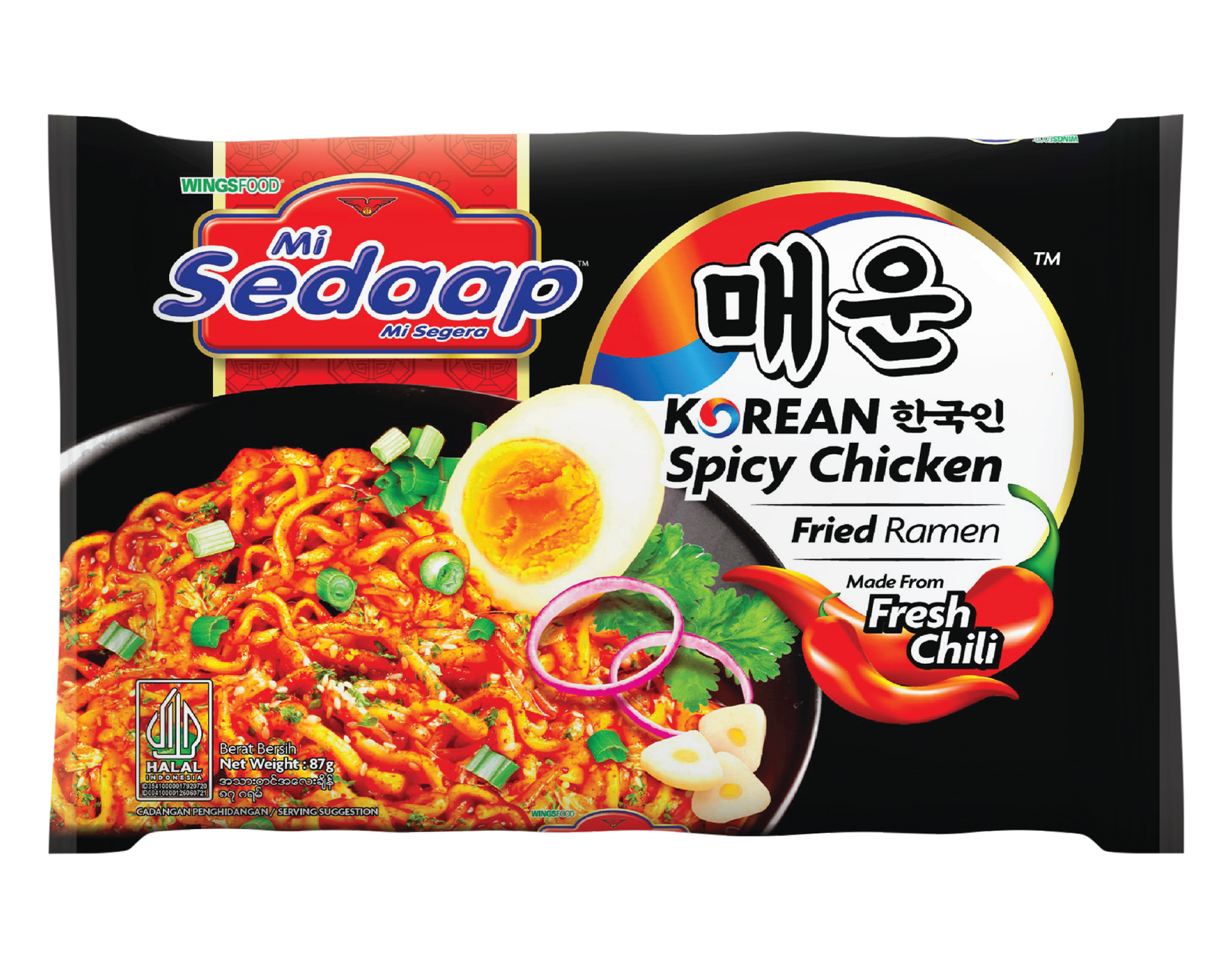
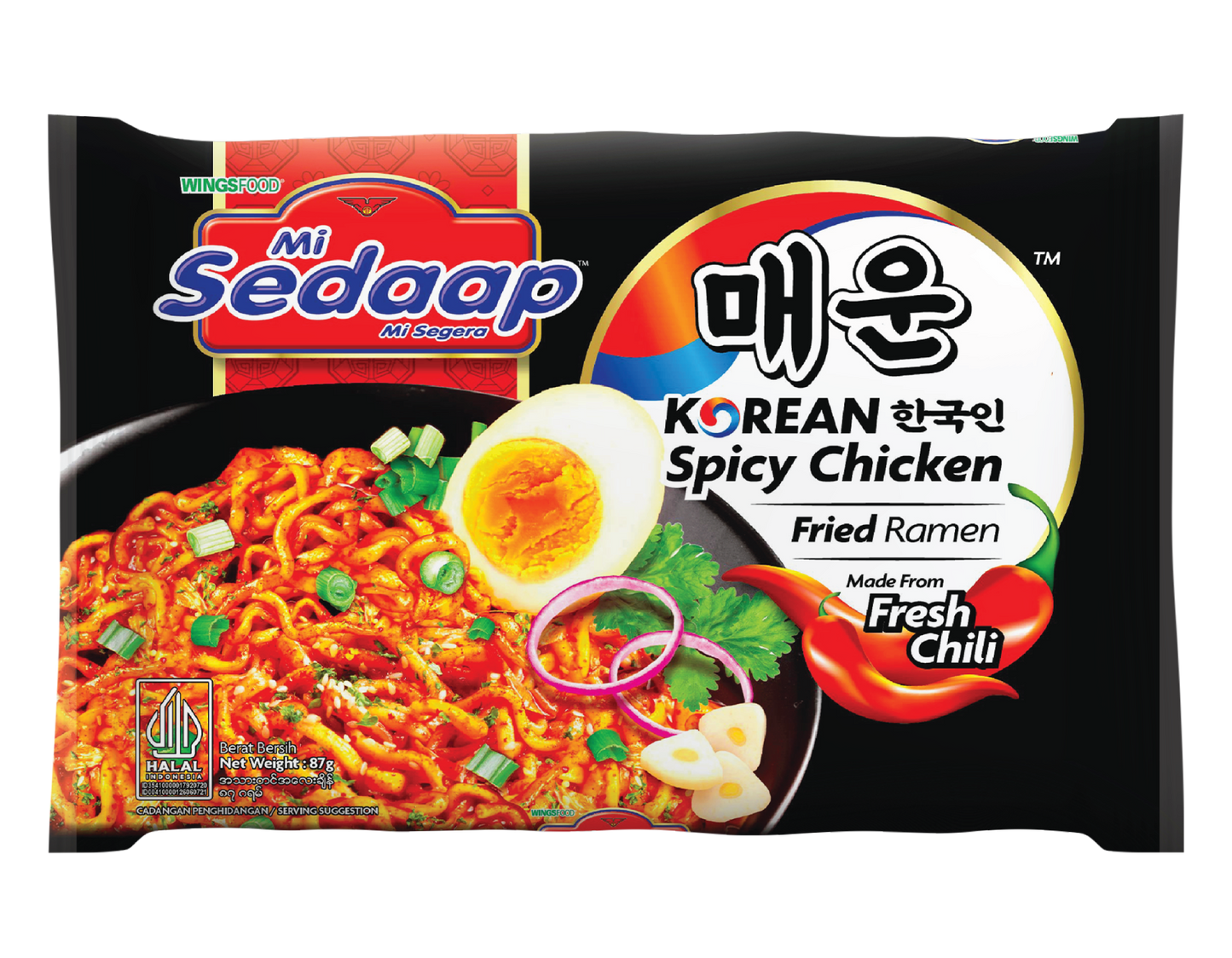
Mi Sedaap performs measurably better in ethnic grocery channels accessed through asian food distributors than in general market mainstream placements. This is expected and strategically important. Stores served by wholesale asian food distributors and indonesian food wholesalers carry the full SKU depth that diaspora shoppers require: Mi Sedaap Original Fried Noodles, Mi Sedaap Soto Mie, Mi Sedaap Singaporean Spicy Laksa, Mi Sedaap Spicylicious, Mi Sedaap Grilled Chicken with Lime, and the Korean Cheese Buldak Spicy and Korean Spicy Chicken variants. That breadth keeps diaspora shoppers in-store and reduces substitution risk.
For wholesale buyers and food wholesaler partners looking to expand their ethnic grocery accounts, Asian Food Distributor access to Mi Sedaap USA inventory provides a direct supply path into the store formats where these loyalty dynamics are strongest.
Which US Metro Areas Generate the Strongest Sell-Through for Southeast Asian Instant Noodles
Greater Los Angeles, the San Francisco Bay Area, Houston, Dallas, Seattle, and New York metro areas consistently index highest for Southeast Asian instant noodle velocity. These markets have established Indonesian and broader Southeast Asian diaspora populations, existing ethnic grocery infrastructure, and food distributor networks that already carry complementary SKUs including chips wholesale, asian snack distributor products, and related seasoning mix brands for gen z shoppers who are also active buyers in these markets.
Private Label Cannibalization Risk and Why Diaspora Shoppers Resist Substitution
Private label cannibalization risk is near zero in the diaspora shopper segment. A shopper buying sedaap noodles is not cross-shopping against a store-brand korean noodle cup or generic cream carbonara ramen. The flavor profiles of Mi Sedaap Cup Korean Spicy Chicken with its dried seaweed topping and umami-rich seasoning, or the Mi Sedaap Cup Soto with its aromatic lime leaf broth, cannot be replicated by private label at any price point. Heritage brand loyalty in this category is structurally resistant to substitution.
How Distributors Can Use Sell-Through Data to Build SKU Depth Arguments
Translating Diaspora Grocery Shopper Loyalty Data Into Category Buyer Conversations
Category buyers respond to numbers, not narratives. Walk into a buyer meeting with replenishment frequency data, velocity indexed against zip code demographics, and basket composition showing halal noodles anchoring multi-category trips. That conversation changes from "can we try this product" to "how many facings do we need."
Using Replenishment and Velocity Data to Justify Increased Mi Sedaap USA SKU Depth
|
SKU |
Format |
Key Signal for Buyers |
|---|---|---|
|
Mi Sedaap Korean Spicy Chicken |
Pack and Cup |
Crossover appeal, korean hot chicken noodle positioning, spiciest noodles korean segment |
|
Mi Sedaap Korean Cheese Buldak Spicy |
Pack |
Buldak cheesy demand, buldak cheesy ramen adjacent, cheese powder for ramen interest |
|
Mi Sedaap Singaporean Spicy Laksa |
Pack |
Instant laksa category builder, cup noodles korean adjacent positioning |
|
Mi Sedaap Original Fried Noodles |
Pack and Cup |
Core diaspora staple, highest replenishment frequency |
|
Mi Sedaap Soto Mie / Cup Soto |
Pack and Cup |
Non-spicy halal segment, broadens household reach |
Practical Distributor Framework for Pitching Indonesian Food Wholesalers and Retail Buyers
Lead with velocity data from comparable zip codes. Present replenishment cycle consistency as proof of loyalty, not just volume. Reference MUI halal certification and ISO 22000 compliance as retail compliance advantages. Quantify private label substitution resistance. For food distributors near me searches driving inbound retail interest, having Mi Sedaap in your portfolio answers the korean instant noodle and instant noodle usa demand while adding a distinct Indonesian food wholesalers category that competitors are not covering. To establish wholesale terms and minimum order quantities, Shop Mi Sedaap Wholesale directly for current distributor pricing and account setup.
FAQ
What sell-through metrics best indicate diaspora-driven repeat purchase behavior for instant noodles like Mi Sedaap?
Replenishment cycle frequency is the strongest single metric. Consistent seven to fourteen day replenishment intervals on core SKUs in diaspora-indexed zip codes indicate household staple behavior. Pair this with basket composition data showing halal noodles anchoring multi-item trips and you have a clear loyalty signal distinct from trial-driven velocity.
How does Mi Sedaap USA perform in ethnic grocery channels compared to mainstream retail shelf placements?
Mi Sedaap noodles consistently outperform in ethnic grocery channels accessed through asian food distributors and indonesian food wholesalers. Full SKU depth availability, including instant noodle snack formats and cup noodle variants, drives higher per-shopper basket values and stronger replenishment consistency than mainstream placements with limited facings.
How can wholesale distributors use scanner data to separate diaspora loyalty buyers from one-time trial purchasers?
Track velocity across four to six weeks rather than single-period snapshots. Trial buyers show velocity spikes followed by decay. Diaspora loyalty buyers show stable or increasing velocity with predictable replenishment intervals. Basket composition showing repeat purchase of specific SKUs like mi noodles or instant noodle snack formats confirms loyalty-tier behavior.
What minimum order quantities or wholesale terms should retailers expect when stocking Mi Sedaap through an Indonesian food distributor USA partner?
Minimum order quantities and wholesale terms vary by distributor relationship and account volume. Retailers and food and beverage buyers should contact indonesian food distributor usa partners directly or visit the Mi Sedaap wholesale portal for current terms, case pack configurations, and pricing tiers applicable to their account size.
How does private label cannibalization risk differ for diaspora shoppers compared to general market consumers buying instant ramen noodles?
For general market consumers buying korean instant noodles spicy or standard spicy noodles buldak formats, private label represents moderate cannibalization risk at aggressive price points. For diaspora shoppers purchasing mi sedaap noodles or indomie mi goreng, private label cannibalization risk is effectively zero. Flavor authenticity, halal certification, and cultural identity alignment create switching costs that price alone cannot overcome.